Photo courtesy of Pamela Farmer Cohen.
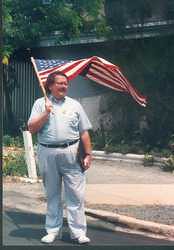





Lightning Brown, a local member of the gay community, is currently running for a seat on the Town Council here in Chapel Hill…
Cont’d as PDF in Lamdba archives

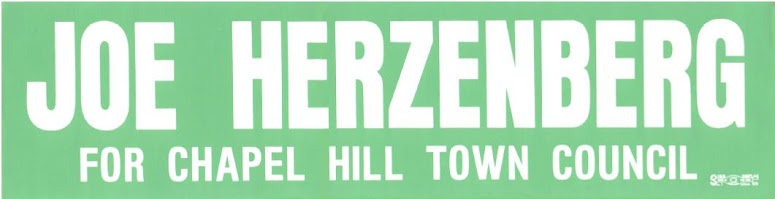
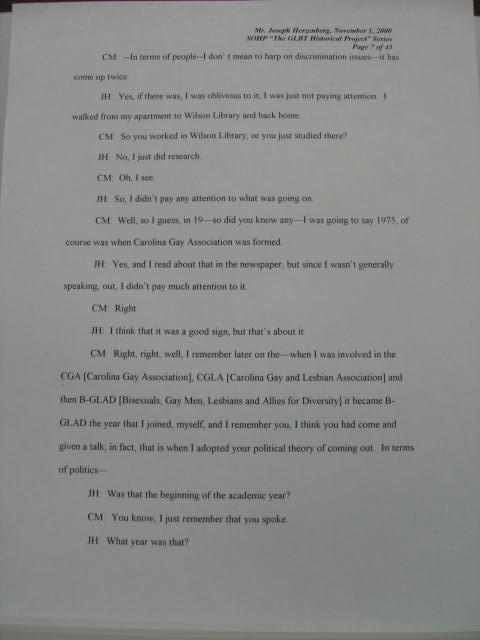
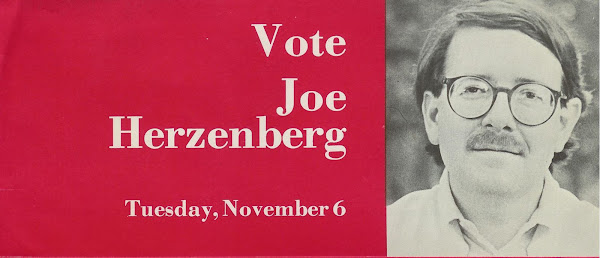
During Joe's first unsuccessful campaign for the Chapel Hill Board of Aldermen (later re-named the Town Council), in 1979, he came in fifth in the race to fill four seats. He was not publicly out at this time, although as one longtime observer of the Triangle's gay community claimed when interviewed in 2000 by Chris McGinnis as part of Listening For A Change: A History of Gay Men and Transgender People in the South, "everyone knew Joe was gay."
Following the election, partially because of his status as the runner up with the highest vote total, Joe was appointed to fill Gerry Cohen’s unexpired term as Alderman, when Cohen stepped down to run for Mayor. He served two years in office, but would lose his race for re-election in 1981, the same year his partner, Lightning Brown, also ran unsuccessfully for the Board.

Joe attended the 1972 Democratic National Convention, along with his friend and colleague from Tougaloo College, John Dittmer, as an alternate delegate from Mississippi.
“The Mississippi Loyalist Democrats had booked a bunch of rooms at the convention hotel, and was not able to fill them,” recalled John Dittmer. “They looked for volunteers, and I asked Joe, then at Chapel Hill, if he wanted to go. The two of us went to Miami, and spent three long days and nights observing events.”
At five in the morning on July 12, the next to last day of the convention, with most of the regular Mississippi delegation gone to bed, the two of them finally made it to the floor as credentialed delegates and got to vote on a series of platform amendments too controversial for prime time.
They heard speeches by Jim Foster and Madeline Davis, the only two openly gay delegates that year, and the first ever openly gay speakers at a national political convention. Then they witnessed the introduction of the first ever gay rights plank to be debated by a major political party. Joe (and John as well) voted for it, even as the resolution went down to overwhelming defeat.
“I remember our walking out of the convention hall as the sun was rising, and Joe was not weary, but instead exhilarated by the experience,” said John Dittmer. “If he was not already hooked on a political career before that convention, he certainly was from that early morning on.”


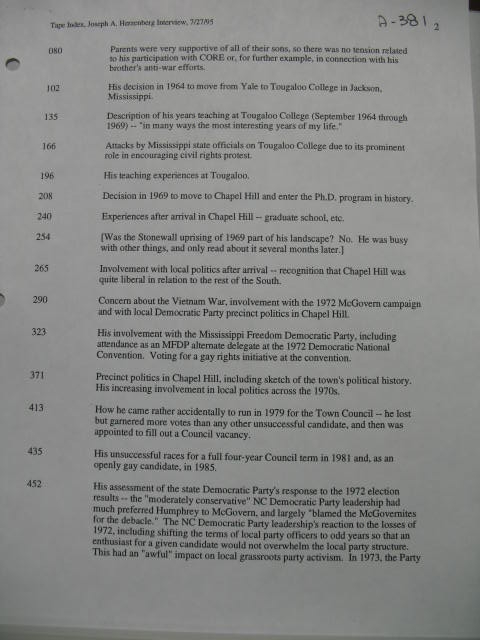
These are the results of a freshmen current events quiz Joe gave to his students on Sept. 11, 1968, during his last year as chair of the history department at Tougaloo College in Mississippi. Interviewed by Joseph Mosnier in 1995, Joe called his time teaching at Tougaloo "in many ways the most interesting years of my life."
(Editor's note: This quiz dates from 1968, but Blogger only allows posts to be categorized as far back as 1970.)