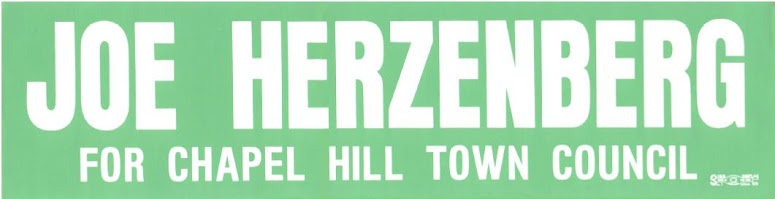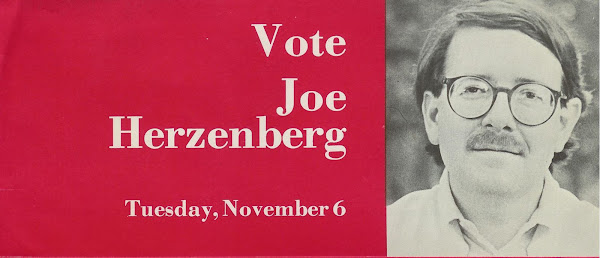
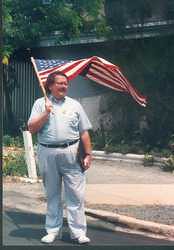




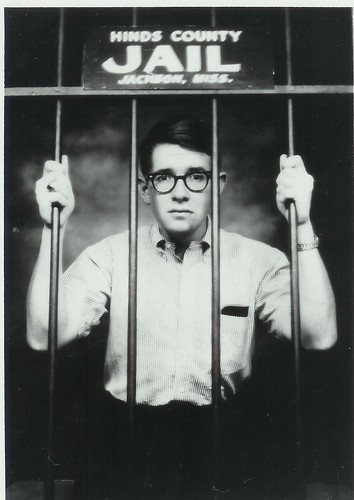
Durham Herald-Sun, Oct. 1, 2004
In April 1981, four sunbathers on the banks of the Little River were attacked by a group who, witnesses said, headed toward them shouting, "We're going to beat some faggots!"
One man, 46-year-old Ronald Antonevich, died three days later.
Joe Herzenberg, who is gay and was a Chapel Hill Town Council member at the time, said he remembers the death vividly.
"It meant that somebody could be killed or badly hurt because somebody thought you were gay," he said.
The attack also enraged Durham's small gay community, prompting "Our Day Out," what Herzenberg recalls as one of North Carolina's earliest gay rallies. The event attracted hundreds of supporters and curious onlookers, and brought a
new civil rights issue into prominence.
Much has changed in the 23 years since Antonevich's fatal beating and the rally that followed. Durham's gay pride festival is now a statewide event that attracts several thousand people. This weekend, PrideFest 2004 celebrates "20 Years of Pride," including the march sparked by the attack and the parades that began a few years later. The activities begin tonight with a "Ninth Street Promenade" and continue Saturday with speeches and a parade on and around Duke's East Campus.
"The climate in Durham is one of the more accepting climates in the state," said Ian Palmquist, executive director of Equality North Carolina, a political action committee working for the gay, lesbian, bisexual and transgender community. "The state as a whole still is relatively conservative," he said, "and, certainly, the work being done in places like Durham is leading the state forward."
Friday, October 1, 2004

Friday, September 17, 2004
Panel prepares for renaming debate: Different stances to shape future of Airport Road
The Daily Tar Heel, Sept. 17, 2004
Mayor Kevin Foy announced the names of the people who will make up the special committee to consider renaming Airport Road in honor of Martin Luther King Jr.
...
The idea of renaming the road originally came before the council in January. But after a series of heated public forums, the council decided it could not make the decision without more citizen input.
Monday, the council chose 20 people to give that input.
Joe Herzenberg, a former Town Council member, long-time Chapel Hill resident and historian of the civil rights movement, was appointed as a citizen-at-large.
Herzenberg said the struggle to rename the road pales in comparison to the struggles in Chapel Hill during King's lifetime.
The renaming is a way to compensate for things that should have been accomplished locally while King was alive, Herzenberg said.
"We should have something to honor Dr. King," Herzenberg said, adding that he is willing to listen to those who disagree with him.
Mayor Kevin Foy announced the names of the people who will make up the special committee to consider renaming Airport Road in honor of Martin Luther King Jr.
...
The idea of renaming the road originally came before the council in January. But after a series of heated public forums, the council decided it could not make the decision without more citizen input.
Monday, the council chose 20 people to give that input.
Joe Herzenberg, a former Town Council member, long-time Chapel Hill resident and historian of the civil rights movement, was appointed as a citizen-at-large.
Herzenberg said the struggle to rename the road pales in comparison to the struggles in Chapel Hill during King's lifetime.
The renaming is a way to compensate for things that should have been accomplished locally while King was alive, Herzenberg said.
"We should have something to honor Dr. King," Herzenberg said, adding that he is willing to listen to those who disagree with him.
Thursday, April 15, 2004
Town: Zap ‘defense of marriage’ law in N.C. - Chapel Hill council wants repeal of law banning gay unions
Durham Herald-Sun, April 15, 2004
CHAPEL HILL -- The Town Council voted unanimously Wednesday to ask state legislators to do away with North Carolina's "defense of marriage" law, which bans same-sex marriages.
...
Councilman Mark Kleinschmidt proposed making the request part of the council's legislative agenda, and he described it Wednesday as a way for the town to say, "Hell yeah, we're about fairness, we're about equality, we're about treating people fairly."
"If that means stepping out and making some noise, then give me the noisemaker," he said.
...
The proposal is aimed at a law the state Legislature passed in 1996, the same year that Congress passed the national Defense of Marriage Act. The federal law defines marriage as a union between a man and woman and gives states autonomy in deciding whether to recognize same-sex marriages from other states or countries.
The N.C. law bans same-sex unions and says that same-sex marriages performed outside the state are not valid in North Carolina.
Joe Herzenberg, a former council member who is gay, spoke in favor of Kleinschmidt's petition. Herzenberg said he was proud that, back in 1975, town officials protected employees from discrimination based on sexual orientation, and he hoped the council would vote unanimously about the same-sex marriage request.
CHAPEL HILL -- The Town Council voted unanimously Wednesday to ask state legislators to do away with North Carolina's "defense of marriage" law, which bans same-sex marriages.
...
Councilman Mark Kleinschmidt proposed making the request part of the council's legislative agenda, and he described it Wednesday as a way for the town to say, "Hell yeah, we're about fairness, we're about equality, we're about treating people fairly."
"If that means stepping out and making some noise, then give me the noisemaker," he said.
...
The proposal is aimed at a law the state Legislature passed in 1996, the same year that Congress passed the national Defense of Marriage Act. The federal law defines marriage as a union between a man and woman and gives states autonomy in deciding whether to recognize same-sex marriages from other states or countries.
The N.C. law bans same-sex unions and says that same-sex marriages performed outside the state are not valid in North Carolina.
Joe Herzenberg, a former council member who is gay, spoke in favor of Kleinschmidt's petition. Herzenberg said he was proud that, back in 1975, town officials protected employees from discrimination based on sexual orientation, and he hoped the council would vote unanimously about the same-sex marriage request.
Wednesday, April 7, 2004
State might not follow locals' lead
The Daily Tar Heel, April 7, 2004
As the towns of Chapel Hill and Carrboro headline a fight for same-sex rights in North Carolina, most doubt the rest of the state will join in on what is now a national debate.
"North Carolina is not the most progressive state," said Joe Herzenberg, former Chapel Hill Town Council member and co-founder of Equality North Carolina, an advocacy group for the lesbian, gay, bisexual and transgender community.
As the first openly gay elected official in the state, Herzenberg has paid close attention to the state of gay rights in North Carolina for more than a decade.
"I think what they are doing in Chapel Hill and Carrboro is great," Herzenberg said. "At least we are starting somewhere."
As the towns of Chapel Hill and Carrboro headline a fight for same-sex rights in North Carolina, most doubt the rest of the state will join in on what is now a national debate.
"North Carolina is not the most progressive state," said Joe Herzenberg, former Chapel Hill Town Council member and co-founder of Equality North Carolina, an advocacy group for the lesbian, gay, bisexual and transgender community.
As the first openly gay elected official in the state, Herzenberg has paid close attention to the state of gay rights in North Carolina for more than a decade.
"I think what they are doing in Chapel Hill and Carrboro is great," Herzenberg said. "At least we are starting somewhere."
Friday, March 19, 2004
Spencer in a different context
Chapel Hill Herald, March 19, 2004 - Letter to the Editor
With respect to Cornelia Phillips Spencer, Chancellor James Moeser suggests that she be judged in the context of the time (i.e., Reconstruction, that period of U.S. history when racial views were most fluid). That's fine. How about going one step further and judging her in the context of her own family?
Samuel Field Phillips, Mrs. Spencer's brother, did such a good job at prosecuting the Ku Klux Klan when he was a federal attorney in Raleigh that President Grant appointed him solicitor general, the second highest position in the Department of Justice. He served for 12 years under four presidents.
As solicitor general he defended civil rights legislation before an increasingly conservative Supreme Court. And then, late in life, Phillips came out of retirement in 1896 to represent Thomas Plessy, a man of color from Louisiana who wanted a better seat on a train. Unfortunately Phillips, Plessy and all of us lost -- in Plessy v. Ferguson.
So when it came to racial matters central to the democratic struggle in the late 19th century, who can deny that Samuel Phillips (and not his sister Cornelia) is the better American hero -- for then and now.
P.S. We should all thank Yonni Chapman for helping us appreciate our past.
Joe Herzenberg
Chapel Hill
With respect to Cornelia Phillips Spencer, Chancellor James Moeser suggests that she be judged in the context of the time (i.e., Reconstruction, that period of U.S. history when racial views were most fluid). That's fine. How about going one step further and judging her in the context of her own family?
Samuel Field Phillips, Mrs. Spencer's brother, did such a good job at prosecuting the Ku Klux Klan when he was a federal attorney in Raleigh that President Grant appointed him solicitor general, the second highest position in the Department of Justice. He served for 12 years under four presidents.
As solicitor general he defended civil rights legislation before an increasingly conservative Supreme Court. And then, late in life, Phillips came out of retirement in 1896 to represent Thomas Plessy, a man of color from Louisiana who wanted a better seat on a train. Unfortunately Phillips, Plessy and all of us lost -- in Plessy v. Ferguson.
So when it came to racial matters central to the democratic struggle in the late 19th century, who can deny that Samuel Phillips (and not his sister Cornelia) is the better American hero -- for then and now.
P.S. We should all thank Yonni Chapman for helping us appreciate our past.
Joe Herzenberg
Chapel Hill
Thursday, March 4, 2004
I cannot imagine how anyone thought John Kerry would be more electable than John Edwards
Edwards' Exit: Thanks supporters, commends Kerry, won't say what's next
Charlotte Observer, March 4, 2004
U.S. Sen. John Edwards, the mill-town kid turned millionaire lawyer turned major presidential candidate, ended his bid for the White House with an endorsement for his chief rival, rousing words for his supporters and no hint of his future plans. Edwards stepped aside Wednesday in a carefully choreographed announcement at Raleigh's Broughton High School, which his oldest son and daughter attended.
...
"I cannot imagine how anyone thought John Kerry would be more electable than John Edwards, but I guess people were concerned about the experience," said Joe Herzenberg, a former member of the Chapel Hill Town Council and liberal activist.
Tuesday, September 30, 2003
N.C. governor weighs execution bias case
Gay.com / PlanetOut.com Network, Sept. 30, 2003
by Christopher Curtis
With time running out for convicted murderer Edward Hartman, his lawyers say they are doing what they can -- including an appeal Tuesday to the North Carolina governor -- to spare him from execution this Friday.
His defenders maintain prosecuting attorneys unfairly used Hartman's homosexuality to get him the death penalty for the murder of his housemate, 77-year-old Herman Smith Jr., in 1993.
...
On Monday Gov. Easley's staff met with gay leaders in the state. Former Chapel Hill Town Council member Joe Herzenberg, who claims to be the first openly gay elected official in the South, said he asked for executive clemency in this case, "because we
believed there was homophobia in his prosecution and conviction."
Mark Kleinschmidt, a current council member who was also at the meeting, reflected on the case, saying, "The injustice hit me personally."
"This reflected more than just an isolated case of injustice," Kleinschmidt told the Gay.com/PlanetOut.com Network. "It's not surprising to us that the courts never cured this. From the lowest courts all the way to the Supreme Court, gays and lesbians had a hard time receiving justice. We need guarantees and fairness, otherwise a court is a farce."
Gay rights advocates say their objections to Hartman's trial primarily focus on the sentencing phase. While his defense tried to explain how the sexual abuse Hartman endured as a child should be considered as a mitigating factor when determining an appropriate punishment, prosecutors said such a claim was irrelevant for homosexuals.
...
by Christopher Curtis
With time running out for convicted murderer Edward Hartman, his lawyers say they are doing what they can -- including an appeal Tuesday to the North Carolina governor -- to spare him from execution this Friday.
His defenders maintain prosecuting attorneys unfairly used Hartman's homosexuality to get him the death penalty for the murder of his housemate, 77-year-old Herman Smith Jr., in 1993.
...
On Monday Gov. Easley's staff met with gay leaders in the state. Former Chapel Hill Town Council member Joe Herzenberg, who claims to be the first openly gay elected official in the South, said he asked for executive clemency in this case, "because we
believed there was homophobia in his prosecution and conviction."
Mark Kleinschmidt, a current council member who was also at the meeting, reflected on the case, saying, "The injustice hit me personally."
"This reflected more than just an isolated case of injustice," Kleinschmidt told the Gay.com/PlanetOut.com Network. "It's not surprising to us that the courts never cured this. From the lowest courts all the way to the Supreme Court, gays and lesbians had a hard time receiving justice. We need guarantees and fairness, otherwise a court is a farce."
Gay rights advocates say their objections to Hartman's trial primarily focus on the sentencing phase. While his defense tried to explain how the sexual abuse Hartman endured as a child should be considered as a mitigating factor when determining an appropriate punishment, prosecutors said such a claim was irrelevant for homosexuals.
...
Friday, June 27, 2003
Triangle gays say court’s decision overdue: Sodomy laws called symbolic affront to rights
Durham Herald-Sun, June 27, 2003
For members of the Triangle's gay and lesbian communities, the end of state sodomy laws was long overdue.
Former Chapel Hill Town Council member Joe Herzenberg remembered another time, 17 years ago, when the Supreme Court was deciding whether to discard them.
"We were waiting for the Supreme Court to issue the Bowers decision," he said. "We were hopeful at the time they would do the right thing, but they didn't."
So when the Supreme Court ruled the laws were illegal Thursday, it marked a shift toward an era when gay rights could no longer be overlooked.
"I think that gays and lesbians are just too obvious all over the place in today's society," said Herzenberg, who was Chapel Hill's first openly gay elected official when he came to office in 1987.
Herzenberg was one of about 100 gays, lesbians and their friends who gathered Thursday evening at the Mad Hatter's Bake Shop in Durham to celebrate after the Supreme Court struck down a ban on gay sex, ruling that the law violated rights to privacy.
The decision effectively made North Carolina's own sodomy laws obsolete.
For members of the Triangle's gay and lesbian communities, the end of state sodomy laws was long overdue.
Former Chapel Hill Town Council member Joe Herzenberg remembered another time, 17 years ago, when the Supreme Court was deciding whether to discard them.
"We were waiting for the Supreme Court to issue the Bowers decision," he said. "We were hopeful at the time they would do the right thing, but they didn't."
So when the Supreme Court ruled the laws were illegal Thursday, it marked a shift toward an era when gay rights could no longer be overlooked.
"I think that gays and lesbians are just too obvious all over the place in today's society," said Herzenberg, who was Chapel Hill's first openly gay elected official when he came to office in 1987.
Herzenberg was one of about 100 gays, lesbians and their friends who gathered Thursday evening at the Mad Hatter's Bake Shop in Durham to celebrate after the Supreme Court struck down a ban on gay sex, ruling that the law violated rights to privacy.
The decision effectively made North Carolina's own sodomy laws obsolete.
Wednesday, August 7, 2002
Senate hopeful Dan Blue draws local support
Chapel Hill Herald, Aug. 7, 2002
CHAPEL HILL - U.S. Senate candidate Dan Blue picked up endorsements from 20 current and former elected officials from Orange and Chatham counties during a Tuesday news conference at the Franklin Street post office.
Nine of his new backers joined Blue for the morning event, which took place on a traditional rallying ground for the local political community.
They said Blue is the Democrat best equipped to take on Republican Elizabeth Dole in November, and the one with the strongest credentials for a would-be senator.
"We need a candidate who will represent Main Street, not Wall Street," Carrboro Mayor Mike Nelson said. "And Dan's just strong. After 22 years in elected office, he's got a strong track record of working on issues that people in this county care about."
Nelson was the main spokesman for the group and the most senior of the current office-holders who lined up behind the candidacy of the former speaker of the N.C House.
Blue, D-Wake, is running on a crowded primary slate that also includes former White House chief of staff Erskine Bowles, former Durham City Councilwoman Cynthia Brown and N.C. Secretary of State Elaine Marshall.
...
The sitting officials who endorsed Blue on Tuesday also included Carrboro aldermen Joal Broun, Mark Dorosin and Diana McDuffee; Chapel Hill town councilman Mark Kleinschmidt and Bill Strom; Orange County Commissioner Moses Carey Jr.; and Chatham County Commissioner Margaret Pollard.
Blue also got endorsements from former city school board members Sue Baker, Fred Battle, Ed Caldwell, J.R. Manley and Ted Parrish; former Chapel Hill town councilmen Mark Chilton, Joe Herzenberg, R.D. Smith and Joe Straley; former Carrboro aldermen Braxton Foushee and Allen Spalt; and former Hillsborough Mayor Horace Johnson.
...
Blue "is electable and he stands for things I think a Democratic candidate should stand for," Herzenberg said. "Some of the so-called New Democrats have gone a little too far to being old Republicans. In particular, I'm afraid that Mr. Bowles has gone too far over to the pro-business side."
CHAPEL HILL - U.S. Senate candidate Dan Blue picked up endorsements from 20 current and former elected officials from Orange and Chatham counties during a Tuesday news conference at the Franklin Street post office.
Nine of his new backers joined Blue for the morning event, which took place on a traditional rallying ground for the local political community.
They said Blue is the Democrat best equipped to take on Republican Elizabeth Dole in November, and the one with the strongest credentials for a would-be senator.
"We need a candidate who will represent Main Street, not Wall Street," Carrboro Mayor Mike Nelson said. "And Dan's just strong. After 22 years in elected office, he's got a strong track record of working on issues that people in this county care about."
Nelson was the main spokesman for the group and the most senior of the current office-holders who lined up behind the candidacy of the former speaker of the N.C House.
Blue, D-Wake, is running on a crowded primary slate that also includes former White House chief of staff Erskine Bowles, former Durham City Councilwoman Cynthia Brown and N.C. Secretary of State Elaine Marshall.
...
The sitting officials who endorsed Blue on Tuesday also included Carrboro aldermen Joal Broun, Mark Dorosin and Diana McDuffee; Chapel Hill town councilman Mark Kleinschmidt and Bill Strom; Orange County Commissioner Moses Carey Jr.; and Chatham County Commissioner Margaret Pollard.
Blue also got endorsements from former city school board members Sue Baker, Fred Battle, Ed Caldwell, J.R. Manley and Ted Parrish; former Chapel Hill town councilmen Mark Chilton, Joe Herzenberg, R.D. Smith and Joe Straley; former Carrboro aldermen Braxton Foushee and Allen Spalt; and former Hillsborough Mayor Horace Johnson.
...
Blue "is electable and he stands for things I think a Democratic candidate should stand for," Herzenberg said. "Some of the so-called New Democrats have gone a little too far to being old Republicans. In particular, I'm afraid that Mr. Bowles has gone too far over to the pro-business side."
Sunday, August 4, 2002
Are you a cat person or a dog person?
Chapel Hill News, Aug. 4, 2002 - Voices From The Hill
"Cat, because I don't really know...well, yes I do. I am really just against dogs. My cat Alice is the greatest cat, I wish she was here."
Joe Herzenberg
Chapel Hill
"Cat, because I don't really know...well, yes I do. I am really just against dogs. My cat Alice is the greatest cat, I wish she was here."
Joe Herzenberg
Chapel Hill
Wednesday, April 24, 2002
Public Must Accept LGBT Politicians
The Daily Tar Heel, April 24, 2002
By Jonathan Chaney
When you run for political office, it's best to make sure your closet is clean of skeletons.
And conventional wisdom also tells you that if you're gay and want a political office, it's best to stay in the closet.
But more and more successful pols are bucking that trend.
If you don't believe me, take a look at the photo exhibit "Out and Elected in the U.S.A." on display at the Carrboro Century Center.
The exhibit was organized by Washington, D.C., photographer R. S. Lee, who spent more than four years compiling all of the material.
There are 60 photos of gay, lesbian, bisexual and transgender Americans who either hold public office or held public office in the past.
Surrounding the photo montages are personal essays from leaders in 30 of the 33 states where openly gay and lesbian officials have captured elected office.
With the sponsorship of the Gay and Lesbian Victory Fund, a national educational and public interest group that helps gay and lesbians attain political office all over the country, the exhibit is on a national tour after a stint in Washington, D.C.
And Carrboro was its first stop.
There's good reason for Chapel Hill and Carrboro to be the national debut for this exhibit.
That's because this area has been the vanguard of LGBT political opportunity in North Carolina.
In fact, two of our own are on display in the exhibit itself.
Joe Herzenberg, former Chapel Hill Town Council member and mayor pro tem, became the state's first openly gay elected official when he sat down in the Chapel Hill Town Hall in 1987.
And Carrboro Mayor Mike Nelson became North Carolina's first openly gay mayor in 1995.
But obviously Chapel Hill and Carrboro are not microcosms of the entire state.
There are still many counties here where people would be deathly afraid to come out of the closet, much less try and run for a publicly elected office.
Supporters of this exhibit, including photographer Lee himself, hope this tour will allay some of those fears -- or at least educate the public at large.
"If this can help one person who has always said, 'No way, no how,' realize that it doesn't have to be that way, that they don't have to spend their life trying to be something that they're not, then I've accomplished my goal," Lee said.
People like Nelson and Herzenberg are anomalies in a state whose national political identity is inexorably linked with Sen. Jesse Helms.
But recognizing their contributions to political mainstreaming for gays and lesbians in the state is important.
After all, what other group of people can say they have representatives holding political office in just 33 of the country's 50 states?
Jewish-Americans?
African-Americans?
Women?
Of course not.
But face it.
Though racial and religious discrimination is still prevalent in our country, discriminating against and ostracizing gays and lesbians are the most socially tolerated forms of intolerance in our society today.
Jokes and innuendo regarding sexual orientation are fair game for sitcoms and late-night comedy hosts.
Walk through the Pit and hear, "That's so gay," or, "What a fag."
In such a climate at large, is it any wonder that there are only 33 states with openly gay and lesbian officials?
(Though I promise that all 50 states have ones still hiding in the closet.)
That's why recognizing those who have taken the bold step to not only open up their closets to the public, but freely come out of them, is worthwhile.
"Out and Elected in the U.S.A." premiered April 14 to a crowd of more than 100. The exhibit runs through May 12.
Take a few minutes to visit.
The men and women who grace the Century Center's walls are pioneers who have my gratitude and respect.
At the very least, they deserve to have us hear what they say.
By Jonathan Chaney
When you run for political office, it's best to make sure your closet is clean of skeletons.
And conventional wisdom also tells you that if you're gay and want a political office, it's best to stay in the closet.
But more and more successful pols are bucking that trend.
If you don't believe me, take a look at the photo exhibit "Out and Elected in the U.S.A." on display at the Carrboro Century Center.
The exhibit was organized by Washington, D.C., photographer R. S. Lee, who spent more than four years compiling all of the material.
There are 60 photos of gay, lesbian, bisexual and transgender Americans who either hold public office or held public office in the past.
Surrounding the photo montages are personal essays from leaders in 30 of the 33 states where openly gay and lesbian officials have captured elected office.
With the sponsorship of the Gay and Lesbian Victory Fund, a national educational and public interest group that helps gay and lesbians attain political office all over the country, the exhibit is on a national tour after a stint in Washington, D.C.
And Carrboro was its first stop.
There's good reason for Chapel Hill and Carrboro to be the national debut for this exhibit.
That's because this area has been the vanguard of LGBT political opportunity in North Carolina.
In fact, two of our own are on display in the exhibit itself.
Joe Herzenberg, former Chapel Hill Town Council member and mayor pro tem, became the state's first openly gay elected official when he sat down in the Chapel Hill Town Hall in 1987.
And Carrboro Mayor Mike Nelson became North Carolina's first openly gay mayor in 1995.
But obviously Chapel Hill and Carrboro are not microcosms of the entire state.
There are still many counties here where people would be deathly afraid to come out of the closet, much less try and run for a publicly elected office.
Supporters of this exhibit, including photographer Lee himself, hope this tour will allay some of those fears -- or at least educate the public at large.
"If this can help one person who has always said, 'No way, no how,' realize that it doesn't have to be that way, that they don't have to spend their life trying to be something that they're not, then I've accomplished my goal," Lee said.
People like Nelson and Herzenberg are anomalies in a state whose national political identity is inexorably linked with Sen. Jesse Helms.
But recognizing their contributions to political mainstreaming for gays and lesbians in the state is important.
After all, what other group of people can say they have representatives holding political office in just 33 of the country's 50 states?
Jewish-Americans?
African-Americans?
Women?
Of course not.
But face it.
Though racial and religious discrimination is still prevalent in our country, discriminating against and ostracizing gays and lesbians are the most socially tolerated forms of intolerance in our society today.
Jokes and innuendo regarding sexual orientation are fair game for sitcoms and late-night comedy hosts.
Walk through the Pit and hear, "That's so gay," or, "What a fag."
In such a climate at large, is it any wonder that there are only 33 states with openly gay and lesbian officials?
(Though I promise that all 50 states have ones still hiding in the closet.)
That's why recognizing those who have taken the bold step to not only open up their closets to the public, but freely come out of them, is worthwhile.
"Out and Elected in the U.S.A." premiered April 14 to a crowd of more than 100. The exhibit runs through May 12.
Take a few minutes to visit.
The men and women who grace the Century Center's walls are pioneers who have my gratitude and respect.
At the very least, they deserve to have us hear what they say.
Tuesday, April 16, 2002
'Out and Elected': Gay people in public office - A Century Center exhibit features openly gay politicians
Chapel Hill Herald, April 16, 2002
By GRETCHEN DECKER
CARRBORO - At any given time in the United States, there are roughly half-a-million elected officials, and a growing number are openly gay.
In "Out and Elected in the U.S.A.," a photo-text exhibit now on display at the Carrboro Century Center, photographer and documentarian R.S. Lee has captured what some are calling a new phase in American political history.
Black and white portraits of elected officials, accompanied by
excerpts from interviews conducted by Lee over the past four years, capture the experiences of 60 openly gay politicians in 30 states over the past 30 years.
At Sunday's opening, Lee said he set out to learn as much as he could by documenting the stories of out and elected officials in their own words - asking, Who are they? What don't we know about them? How did it happen?
Lee said he was drawn to these questions because when people who are "out" decide to run for office, "They hold themselves up to public scrutiny with the uncertainty of how the electorate would respond."
"It's difficult to be gay in our culture in many ways," Lee said. "We have a way of putting politicians on a pedestal and also throwing eggs at them."
...
Carrboro Mayor Mike Nelson was among several local politicians to attend the opening.
"I'm glad that these folks are being recognized for the work they did because they're pioneers in their own communities," Nelson said of the exhibit, in which he is one of the politicians featured.
"This last 25 years is really important because it was the first wave of openly gay and lesbian people in public office," he said.
By documenting this moment in American political history, "Ron has done a service to not just the lesbian and gay community, but the American community in general," Nelson said. "It's not unlike the first wave of African Americans being elected to office."
...
Former Chapel Hill Town Council member Joe Herzenberg, who is also featured in the exhibit, said that the exhibit showcases "a remarkably good bunch of people."
"To be gay or lesbian and open about it. I don't know how to explain this. But you have to be a bit better than the rest," Herzenberg said.
Herzenberg said that the public expects gay politicians to be beyond reproach, "even though we're not."
By GRETCHEN DECKER
CARRBORO - At any given time in the United States, there are roughly half-a-million elected officials, and a growing number are openly gay.
In "Out and Elected in the U.S.A.," a photo-text exhibit now on display at the Carrboro Century Center, photographer and documentarian R.S. Lee has captured what some are calling a new phase in American political history.
Black and white portraits of elected officials, accompanied by
excerpts from interviews conducted by Lee over the past four years, capture the experiences of 60 openly gay politicians in 30 states over the past 30 years.
At Sunday's opening, Lee said he set out to learn as much as he could by documenting the stories of out and elected officials in their own words - asking, Who are they? What don't we know about them? How did it happen?
Lee said he was drawn to these questions because when people who are "out" decide to run for office, "They hold themselves up to public scrutiny with the uncertainty of how the electorate would respond."
"It's difficult to be gay in our culture in many ways," Lee said. "We have a way of putting politicians on a pedestal and also throwing eggs at them."
...
Carrboro Mayor Mike Nelson was among several local politicians to attend the opening.
"I'm glad that these folks are being recognized for the work they did because they're pioneers in their own communities," Nelson said of the exhibit, in which he is one of the politicians featured.
"This last 25 years is really important because it was the first wave of openly gay and lesbian people in public office," he said.
By documenting this moment in American political history, "Ron has done a service to not just the lesbian and gay community, but the American community in general," Nelson said. "It's not unlike the first wave of African Americans being elected to office."
...
Former Chapel Hill Town Council member Joe Herzenberg, who is also featured in the exhibit, said that the exhibit showcases "a remarkably good bunch of people."
"To be gay or lesbian and open about it. I don't know how to explain this. But you have to be a bit better than the rest," Herzenberg said.
Herzenberg said that the public expects gay politicians to be beyond reproach, "even though we're not."
Sunday, April 14, 2002
A Gay Person In Public Life - essay by Joe Herzenberg
Essay for Out and Elected in the USA photo exhibit, written 2001
by JOE HERZENBERG
It was a simple matter. I had always been interested in politics. Both my father and his father had served on the Borough Council and the Board of Education in my hometown of Franklin, New Jersey, where I was born.
After five years at Yale, where I studied history, and another five years at Tougaloo College in Mississippi, where I taught and helped make history and witnessed great social change, I arrived in Chapel Hill, North Carolina, a southern university town with a tradition of liberalism and tolerance. That was in 1969, when the voters had just elected the first Black mayor in a White-majority southern town.
While still in the closet, I ran for the Chapel Hill Town Council for the first time in 1979. I lost, but then served two years on the Council after being appointed to fill a vacancy. It wasn’t until 1987, after I came out, that I was elected to a full term on the Council. I served for six years, and one of those years, 1992, I was also Mayor Pro Tempore.
Chapel Hill has about 45,000 residents, half of them University of North Carolina students. And our local elections are non-partisan. (There are not enough Republicans to make much difference.) Gay students and activists, and sometimes the North Carolina press tried to make a big deal about my election as the first openly gay official on "the Southern Mainland" – there was already one of us in Key West. But most of my constituents didn’t seem to mind one way or the other, so long as I was doing a good job tending to the public business.
I enjoyed my service on the Town Council, where I helped accomplish a good deal including a shelter for the homeless, a new public library, a downtown parking garage and plaza, important additions to our greenway system, an AIDS house, and new legislation in several areas including tree protections and noise abatement. And I always was, and still am, a gay person in public life in our town.
by JOE HERZENBERG
It was a simple matter. I had always been interested in politics. Both my father and his father had served on the Borough Council and the Board of Education in my hometown of Franklin, New Jersey, where I was born.
After five years at Yale, where I studied history, and another five years at Tougaloo College in Mississippi, where I taught and helped make history and witnessed great social change, I arrived in Chapel Hill, North Carolina, a southern university town with a tradition of liberalism and tolerance. That was in 1969, when the voters had just elected the first Black mayor in a White-majority southern town.
While still in the closet, I ran for the Chapel Hill Town Council for the first time in 1979. I lost, but then served two years on the Council after being appointed to fill a vacancy. It wasn’t until 1987, after I came out, that I was elected to a full term on the Council. I served for six years, and one of those years, 1992, I was also Mayor Pro Tempore.
Chapel Hill has about 45,000 residents, half of them University of North Carolina students. And our local elections are non-partisan. (There are not enough Republicans to make much difference.) Gay students and activists, and sometimes the North Carolina press tried to make a big deal about my election as the first openly gay official on "the Southern Mainland" – there was already one of us in Key West. But most of my constituents didn’t seem to mind one way or the other, so long as I was doing a good job tending to the public business.
I enjoyed my service on the Town Council, where I helped accomplish a good deal including a shelter for the homeless, a new public library, a downtown parking garage and plaza, important additions to our greenway system, an AIDS house, and new legislation in several areas including tree protections and noise abatement. And I always was, and still am, a gay person in public life in our town.
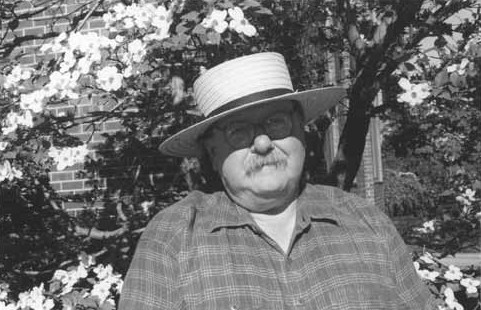
Joe in 2000, as featured in Out and Elected in the U.S.A. photo exhibit
Photo exhibit documents gay elected officials
Chapel Hill News, April 14, 2002
By Virginia Knapp
CARRBORO -- A new exhibit, "Out and Elected in the U.S.A.," opening today at the Carrboro Century Center provides a snapshot of gays and lesbians in recent political history.
"The real importance of this exhibit is the historical value of capturing this moment in time," Carrboro Mayor Mike Nelson said. "The last quarter-century has seen the first openly gay people elected to public office. It's like when the first women were elected and the first African Americans."
"It's important that those folks and their lives be documented in some way."
The photo exhibit of 60 openly lesbian, gay, bisexual or transgender Americans who have served or currently serve in elected office throughout the country includes Nelson and Joe Herzenberg, a former Chapel Hill Town Council member and mayor pro tem.
Herzenberg became North Carolina's first openly gay elected official when he took office in 1987, and Nelson became the state's first openly gay mayor in 1995.
"I think gay political people elsewhere in the country think we are so brave down here having to deal with Jesse Helms," Herzenberg said. "But I've never met Jesse Helms. He doesn't live in my town. Really, life isn't so difficult here in North Carolina.
"But there may be a pity thing going on."
Carrboro is the first stop on a national tour for the exhibit, which was organized by Washington, D.C., photographer R.S. Lee and sponsored by the Gay and Lesbian Victory Foundation.
"While the collection focuses specifically on the collective experience of lesbian, gay, bisexual and transgender political candidates, ultimately it reflects the courage of all people who hold themselves up to the scrutiny of the electorate," Lee said. "They care about their communities and want to make a difference."
The 60 photos hang near personal essays written by officials from 30 of the 33 states where openly gay and lesbian candidates have been elected.
Herzenberg said the photos and personal essays in the exhibit help put a face on a part of the population that many people might not realize is there.
"I still believe very strongly that it's important for gay people to come out and run for public office," Herzenberg said. "It's important because it helps to dispel the notion that there's no gay people where we live."
Nelson said he was honored that the exhibit is debuting in Carrboro, and he hopes that the show will highlight the larger issues of democracy and fairness.
"A democracy works best when a diverse set of views is at the table when decisions are being made," Nelson said. "The importance of having openly gay elected officials can't be overstated."
By Virginia Knapp
CARRBORO -- A new exhibit, "Out and Elected in the U.S.A.," opening today at the Carrboro Century Center provides a snapshot of gays and lesbians in recent political history.
"The real importance of this exhibit is the historical value of capturing this moment in time," Carrboro Mayor Mike Nelson said. "The last quarter-century has seen the first openly gay people elected to public office. It's like when the first women were elected and the first African Americans."
"It's important that those folks and their lives be documented in some way."
The photo exhibit of 60 openly lesbian, gay, bisexual or transgender Americans who have served or currently serve in elected office throughout the country includes Nelson and Joe Herzenberg, a former Chapel Hill Town Council member and mayor pro tem.
Herzenberg became North Carolina's first openly gay elected official when he took office in 1987, and Nelson became the state's first openly gay mayor in 1995.
"I think gay political people elsewhere in the country think we are so brave down here having to deal with Jesse Helms," Herzenberg said. "But I've never met Jesse Helms. He doesn't live in my town. Really, life isn't so difficult here in North Carolina.
"But there may be a pity thing going on."
Carrboro is the first stop on a national tour for the exhibit, which was organized by Washington, D.C., photographer R.S. Lee and sponsored by the Gay and Lesbian Victory Foundation.
"While the collection focuses specifically on the collective experience of lesbian, gay, bisexual and transgender political candidates, ultimately it reflects the courage of all people who hold themselves up to the scrutiny of the electorate," Lee said. "They care about their communities and want to make a difference."
The 60 photos hang near personal essays written by officials from 30 of the 33 states where openly gay and lesbian candidates have been elected.
Herzenberg said the photos and personal essays in the exhibit help put a face on a part of the population that many people might not realize is there.
"I still believe very strongly that it's important for gay people to come out and run for public office," Herzenberg said. "It's important because it helps to dispel the notion that there's no gay people where we live."
Nelson said he was honored that the exhibit is debuting in Carrboro, and he hopes that the show will highlight the larger issues of democracy and fairness.
"A democracy works best when a diverse set of views is at the table when decisions are being made," Nelson said. "The importance of having openly gay elected officials can't be overstated."
Carrboro first stop in nationwide tour for Out & Elected in the U.S.A.
Press Release, Town of Carrboro, April 14, 2002
The Carrboro Art Committee, Chapel Hill Public Arts Commission, and the Gay and Lesbian Victory Foundation are pleased to announce the arrival of an important new nationally touring exhibit. Out & Elected in the U.S.A. features 60 photographs with accompanying texts of openly lesbian, gay, bisexual, and transgender (LGBT) Americans who have served or currently are serving at nearly every level of elected office throughout the country. Through the efforts of Carrboro Mayor Mike Nelson, Carrboro was the first stop in the nationwide tour.
"With black and white photographs, and the words of the subjects, this is a remarkable and thought-provoking body of work that documents the past 30 years of a significant emerging trend in U.S. political history," said Nelson.
The collection includes subjects from 30 of the 33 states where openly LGBT individuals have been elected.
Brian K. Bond, Executive Director of the Gay and Lesbian Victory Foundation, commented: "We are pleased to sponsor an exhibit that offers such personal and accessible testimony to the importance of the work we do at the Victory Foundation, preparing LGBT leaders for positions in public life."
Out & Elected in the U.S.A. kicked off the tour with a display at the Carrboro Century Center on Sunday April 14, with a reception from 5 until 7 pm. The free reception was open to the public and hosted a crowd of more than 100 people.
...
The exhibit has been coordinated locally by volunteer Catherine DeVine. Of particular interest at the local level are two photos of local elected officials, Carrboro Mayor Mike Nelson and former Chapel Hill Town Council member Joe Herzenberg. The Carrboro Art Committee is honored to be showing this exhibition from April 14 until May 12, 2002. Stop by and check it out.
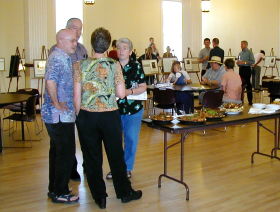
Joe at Out & Elected in the USA reception, seated with hat
The Carrboro Art Committee, Chapel Hill Public Arts Commission, and the Gay and Lesbian Victory Foundation are pleased to announce the arrival of an important new nationally touring exhibit. Out & Elected in the U.S.A. features 60 photographs with accompanying texts of openly lesbian, gay, bisexual, and transgender (LGBT) Americans who have served or currently are serving at nearly every level of elected office throughout the country. Through the efforts of Carrboro Mayor Mike Nelson, Carrboro was the first stop in the nationwide tour.
"With black and white photographs, and the words of the subjects, this is a remarkable and thought-provoking body of work that documents the past 30 years of a significant emerging trend in U.S. political history," said Nelson.
The collection includes subjects from 30 of the 33 states where openly LGBT individuals have been elected.
Brian K. Bond, Executive Director of the Gay and Lesbian Victory Foundation, commented: "We are pleased to sponsor an exhibit that offers such personal and accessible testimony to the importance of the work we do at the Victory Foundation, preparing LGBT leaders for positions in public life."
Out & Elected in the U.S.A. kicked off the tour with a display at the Carrboro Century Center on Sunday April 14, with a reception from 5 until 7 pm. The free reception was open to the public and hosted a crowd of more than 100 people.
...
The exhibit has been coordinated locally by volunteer Catherine DeVine. Of particular interest at the local level are two photos of local elected officials, Carrboro Mayor Mike Nelson and former Chapel Hill Town Council member Joe Herzenberg. The Carrboro Art Committee is honored to be showing this exhibition from April 14 until May 12, 2002. Stop by and check it out.
Joe at Out & Elected in the USA reception, seated with hat
Wednesday, April 10, 2002
A tribute to a community treasure - Frances Hargraves
Chapel Hill News, April 10, 2002
By Valarie Schwartz, Staff Writer
Miss Frances has fallen off her horse.
That's how Frances Hargraves phrased it three years ago when lung cancer struck and she had to interrupt her volunteer work at the Northside pre-school, where she reads to the children, to have surgery and recover.
She has fallen off her horse again, and this time she is wondering if she will be able to return to the beloved children. They were the first concern she mentioned to me several weeks ago while she was still at UNC Hospitals.
Now she is back at home, but the prognosis does not look good for her return to the saddle. The cancer is back and, with Hargarves only a few weeks shy of 88 (her birthday is April 23), treatment looks more awful than helpful.
As divine providence would have it, Edwin Caldwell, state Sen. Ellie Kinnaird, Velma Perry, Florence Peacock and Joe Herzenberg put their heads together about a month before Hargraves' "fall" and decided to give a tribute to one of Chapel Hill's finest and most-loved citizens.
...
On Sunday, residents are invited to "A Tribute to Frances Hargraves" at the Horace Williams House from 3-5 p.m., where the retired teacher who has been the liaison between the black and white communities in Chapel Hill will be treated like the royal person she is.
"We want to recognize the treasure Frances has been to our community," Kinnaird said. "She has created so much with her presence, energy and creativity. We just wanted to make a tribute to her -- to our beloved Miss Frances from all her friends and the community."
...
Joe Herzenberg has known Hargraves since the early 1970s.
"She was always so friendly and wanting to help with whatever the project was," he said, noting that Hargraves' attitude made a difference. "I just always enjoyed working with Frances."
...
Hargraves grew up on the family farm in the spot on West Franklin Street where McDonald's now stands -- in the house in which her mother, Alice Neal, was born. Hargraves lived there until she was an adult, but while still a child, her mother, as the cook for two presidents of the University of North Carolina, exposed her to greatness. During the five years her mother worked for Harry Woodburn Chase, Hargraves accompanied her mother and became good friends with the president's daughter, with whom she ate lunch every day.
During that time, little Frances learned that skin color made her different in the eyes of some. But she also learned that some white people are color-blind.
When Frank Porter Graham became the president of the university, Alice Neal's excellent cooking skills were again called into service on East Franklin Street. Graham made a lasting impact on Hargraves.
"Uncle Frank was ahead of his time," Hargraves said. "He was such a wonderful man, he was just born during the wrong time." But she recognizes that the strides that were made back then were only possible because of people like Graham.
There is so much to be said about Frances Hargraves and all she has accomplished and all the hearts she has filled. The gathering on Sunday will be the chance for people to show their love and, of course, to learn even more about this Chapel Hill treasure.
If you treasure Frances Hargraves, be there. She will be seated in the foyer and will greet people as long as her strength and her family will allow, then everyone will move into the rotunda, where 11 people will speak.
By Valarie Schwartz, Staff Writer
Miss Frances has fallen off her horse.
That's how Frances Hargraves phrased it three years ago when lung cancer struck and she had to interrupt her volunteer work at the Northside pre-school, where she reads to the children, to have surgery and recover.
She has fallen off her horse again, and this time she is wondering if she will be able to return to the beloved children. They were the first concern she mentioned to me several weeks ago while she was still at UNC Hospitals.
Now she is back at home, but the prognosis does not look good for her return to the saddle. The cancer is back and, with Hargarves only a few weeks shy of 88 (her birthday is April 23), treatment looks more awful than helpful.
As divine providence would have it, Edwin Caldwell, state Sen. Ellie Kinnaird, Velma Perry, Florence Peacock and Joe Herzenberg put their heads together about a month before Hargraves' "fall" and decided to give a tribute to one of Chapel Hill's finest and most-loved citizens.
...
On Sunday, residents are invited to "A Tribute to Frances Hargraves" at the Horace Williams House from 3-5 p.m., where the retired teacher who has been the liaison between the black and white communities in Chapel Hill will be treated like the royal person she is.
"We want to recognize the treasure Frances has been to our community," Kinnaird said. "She has created so much with her presence, energy and creativity. We just wanted to make a tribute to her -- to our beloved Miss Frances from all her friends and the community."
...
Joe Herzenberg has known Hargraves since the early 1970s.
"She was always so friendly and wanting to help with whatever the project was," he said, noting that Hargraves' attitude made a difference. "I just always enjoyed working with Frances."
...
Hargraves grew up on the family farm in the spot on West Franklin Street where McDonald's now stands -- in the house in which her mother, Alice Neal, was born. Hargraves lived there until she was an adult, but while still a child, her mother, as the cook for two presidents of the University of North Carolina, exposed her to greatness. During the five years her mother worked for Harry Woodburn Chase, Hargraves accompanied her mother and became good friends with the president's daughter, with whom she ate lunch every day.
During that time, little Frances learned that skin color made her different in the eyes of some. But she also learned that some white people are color-blind.
When Frank Porter Graham became the president of the university, Alice Neal's excellent cooking skills were again called into service on East Franklin Street. Graham made a lasting impact on Hargraves.
"Uncle Frank was ahead of his time," Hargraves said. "He was such a wonderful man, he was just born during the wrong time." But she recognizes that the strides that were made back then were only possible because of people like Graham.
There is so much to be said about Frances Hargraves and all she has accomplished and all the hearts she has filled. The gathering on Sunday will be the chance for people to show their love and, of course, to learn even more about this Chapel Hill treasure.
If you treasure Frances Hargraves, be there. She will be seated in the foyer and will greet people as long as her strength and her family will allow, then everyone will move into the rotunda, where 11 people will speak.
Sunday, December 16, 2001
Listening for a Change: Interview with Joe’s friend and fellow activist Mark Donahue, conducted by Chris McGinnis
Oral History Interview with Mark Donahue, conducted by Chris McGinnis, Dec. 16, 2001.
Interview Number: K-0843. Archived for listening as part of the Southern Oral History Program at the Southern Historical Collection Manuscripts Department in Wilson Libary, UNC-Chapel Hill.
Mark Donahue is a fellow activist and close friend of Joe's who worked on three of his five campaigns for Chapel Hill Town Council. He served as editor of Lambda, the Carolina Gay & Lesbian Association's newsletter, at UNC-CH during the mid-to-late 1980's.
Along with Joe, Mark was interviewed by Chris McGinnis in 2001 . Portions of the transcript are reproduced below.
Interview Number: K-0843. Archived for listening as part of the Southern Oral History Program at the Southern Historical Collection Manuscripts Department in Wilson Libary, UNC-Chapel Hill.
Mark Donahue is a fellow activist and close friend of Joe's who worked on three of his five campaigns for Chapel Hill Town Council. He served as editor of Lambda, the Carolina Gay & Lesbian Association's newsletter, at UNC-CH during the mid-to-late 1980's.
Along with Joe, Mark was interviewed by Chris McGinnis in 2001 . Portions of the transcript are reproduced below.
Listening for a Change: History of Gay Men and Transgender People in the South
These interviews by Chris McGinnis, an undergraduate at the University of North Carolina at Chapel Hill, were conducted for an independent study in the fall semester of 2000 and for the Southern Oral History Program in 2001-2002.
They give a perspective of gay life in the South, with particular emphasis on North Carolina in the 1960s through the 1980s. The interviews chronicle the development of the gay community in the South and explore early gay bars, social events and festivals of the gay community, gay organizations and activism, and places where gay men met and engaged in public sex, among other topics.
Included are interviews with Chapel Hill, N.C., town council member Joseph A. Herzenberg and writer Perry Deane Young.
CHRIS MCGINNIS: I am interviewing Mr. Mark Donahue. All right Mark, usually when I am interviewing folks, the first thing I ask them is where they were born and where they grew up, and that spiel.
MARK DONAHUE: I was born in Indian Trail, North Carolina, which is a suburb of Monroe.
CM: Oh!
MD: The home of Jesse Helms. I grew up there and entered the University of North Carolina at Chapel Hill in the fall of 1981.
CM: Okay. So, what was your major at UNC?
MD: Political Science.
...
CM: Did you ever hold a position in CGLA?
MD: Yes, I ended up being editor of the Newsletter, Lambda. And actually that was at a later time, in a later incarnation. It was like in '87 or '88. I suspended my studies for a couple of years and was going part time during that time, but when I got back into the full swing of things, became Editor of the Newsletter, which I really enjoyed as it turns out, putting that newsletter together was a real pain in the butt.
CM: Yeah, I did it too.
MD: Yeah, it was hard pulling it together, it was hard getting stories, it was hard getting people to use their real names and getting stories. It was hard getting people to use their real names in interviews and things like that, because some people didn’t want to be—have their name used in the school, in the school gay news rag, as it was referred to.
...
MD: Also, as an advisor to the organization at that time was Cecil Wooten, Classics Professor--
CM: He remained until relatively recently.
MD: Cecil was great, he was always there if we had any questions. We also had the advantage of someone who had ran as an openly gay man for the Chapel Hill Town Council. At that point, he had—let’s see had he been elected? Yes, he had been elected in 1987, Joe Herzenberg. I worked on his campaign briefly in '85 when he ran for the town council and lost—
CM: Right, and '87 was that when Mike Nelson managed the campaign?
MD: You know, I can’t remember if Mike was the manager or not, but I know that he worked on the campaign. I can’t tell you, Joe Herzenberg could tell you.
CM: I believe that was the year, because '87 was the year that he won—
MD: Yes.
CM: --'85 he ran and lost and '87 he won and ran, I mean ran and won [Chris laughs]
MD: And in '91, I was more involved in Joe’s re-election. I was put in charge of the endorsement ad. I was basically collecting the signatures of folks who supported him in his re-election and to date, I think that this still stands true - it is the largest endorsement ad, in terms of the number of participants in Chapel Hill Town Council History. (editor's note - 599 people and one cat signed this endorsement ad).
CM: Wow! That’s great.
MD: So, I was very proud of that.
CM: What was the general feel of the town when Joe was running? I mean, did you feel that Chapel Hill was liberal outside of the University Community—meaning the students—were pretty supportive of him?
MD: I think that there were a few detractors of Joe. Some of those were related to Joe being gay, others were—
CM: They just didn’t like Joe.
MD: They didn’t like Joe for other political reasons, that had to do with some town development issue, or it had to do with the fact that Joe was such an outspoken liberal Democrat on other issues. So, I think that there was a strain of detractors, with Joe in his campaign. But, I think, generally he got great support. I think that he got great student support. Students are notorious for not really participating in town elections. Number one, because they are not registered to vote. Number two, they are registered to vote, but they are not registered to vote in Chapel Hill, they are registered back in their hometown. Number three; they don’t understand the election process very well. Number four, they are uneducated and unconcerned that much about town issues, as opposed to student issues and number five, they are distracted by athletic events and things happening on campus like exams.
CM: Imagine that.
MD: Imagine that [Chris laughs] I think that in that point in time, Joe Herzenberg had the largest student turnout—
CM: He had a good political machine.
MD: He had a good political machine. He did very well with students. Later on there was Mark Chilton, who was a student at the time, who did very well among students and there have been others since then.
CM: So tell me a little bit about Joe as an individual, was he very active in the gay community per se? Or was it that he was just an out gay person running in the...?
MD: Interesting. My impression of Joe at that time was yes he was an out gay person and he was outspoken, but I tend to think of Joe as a Democrat before I think of him as a gay person. I would say that Joe has been very educating in terms of what—he explained to me the complete differences between the Democrat and Republican Party. Most of which I basically understood, but he did sort of school me on a lot of fine points. I basically figured out just how evil some parts of the Republican Party were at that time and still some remain to this day, such as Jesse Helms. But, you know, Joe, I think was a great influence. I remember in 1985 when he was running for town council as an openly gay person, and I was like, “Wow! He is running for political office and he is not hiding the fact that he is gay.” I thought that was amazing. Of course it was very disappointing when he lost. He didn’t lose by much, but other things were working against him at that time.
CM: What did you do as a volunteer with his campaign?
MD: In '85? Mainly I stuffed envelopes and I put up—
CM: You did mass mailings?
MD: We did mass mailings, some were fundraising letters, some were get out the vote. Also, as we got closer to election day we worked on get out the vote—GOTV in the lingo—which mainly means taking “Vote for Joe Herzenberg” signs and putting them up at strategic locations?
CM: What kind of budget did he have?
MD: I—as I recall he did not have much money. And a lot of the things that were done for Joe’s campaign were very low cost. It was all going to, I think it was Copytron in those days. I don’t think that Kinkos was around at that point, you know it was very cheap copies. He did invest a little bit of money in having bumper stickers printed up, which were very nice, and some nice posters, which you need. I don’t know exactly how much he spent on his campaign.
CM: But he did spend some of his own money as far as you know?
MD: Well, he raised money within the gay community. So, he raised enough money to run a credible race in '85. Evidently, it was not enough money to win. But, he came back in two years and was able to raise more money and I think articulated his campaign very well.
...
MD: (Mike Nelson) became involved with CGLA later on. Certainly became an outspoken person and got a lot of media attention because he was very good at sort of cutting to the chase and he had been tutored quite well, I think, by Joe Herzenberg and was able to get the media’s attention, and local press. When he ran for the Carrboro Town Council the first time. I think he—I am trying to remember—did he lose the first time?
CM: I don’t know his political history very well.
MD: I think that he lost the first time, just like Joe Herzenberg. I think he lost the first time. But, then he came back and won. So, you know, Mike clearly had aspirations for political office. And he was just a perfect candidate in so many ways.
...
CM: Well great, are there any final comments that you would like to make?
MD: I think that we all have to realize that, you know, Rome was not built in a day. And it will take a long time, and I realized in the mid 80s that I was in this for the long haul, you know. We have to be fighting not only when we are college students and had little to lose because we don’t have any—we don’t owe anything to the establishment as it exists, but we have to continue that in our adult lives and in our professional lives, and also I think in our personal lives, the most important place. We have to come out to family; we have to come out to friends. We have to—if someone tells an anti-gay joke in front of us and they don’t know we are gay, I think that it is important to say, “I disapprove of that.” I think that you have to be vocal, and until we all start coming out and being more vocal at all times and at all stages of our life, we are not going to make much progress. If we start going down the road of being an advocate at all times, then I think we will have success.
Monday, November 12, 2001
More Voters Head To Polls This Year
The Daily Tar Heel, Nov. 12, 2001
Twenty-six percent of Orange County's 77,224 registered voters participated in this year's election, a 10 percent increase since 1999, the last municipal election year.
...
Joe Herzenberg, a former member of the Chapel Hill Town Council, said he is "an addicted voter" and that he couldn't recall ever missing an election.
"(Voting) is what our country's all about," Herzenberg said.
But Herzenberg said that in many years of participating in local elections, he has been frustrated by a lack of student votes. He said that if every resident of Teague Residence Hall voted for one candidate, that candidate would probably win.
Twenty-six percent of Orange County's 77,224 registered voters participated in this year's election, a 10 percent increase since 1999, the last municipal election year.
...
Joe Herzenberg, a former member of the Chapel Hill Town Council, said he is "an addicted voter" and that he couldn't recall ever missing an election.
"(Voting) is what our country's all about," Herzenberg said.
But Herzenberg said that in many years of participating in local elections, he has been frustrated by a lack of student votes. He said that if every resident of Teague Residence Hall voted for one candidate, that candidate would probably win.
Saturday, September 1, 2001
The last 'white racist politician'
Chapel Hill Herald, Sept. 1, 2001
By PERRY DEANE YOUNG
Washington Post columnist David Broder deserves the Hemingway "built-in bull-- detector award" for all time for cutting through all the embarrassing nonsense that has been published in recent days about the retirement of Sen. Jesse Helms.
Broder wrote: "Those who believe that the 'liberal press' always has its knives sharpened for Republicans and conservatives must have been flummoxed by the coverage of Sen. Jesse Helms' announcement last week that he will not run for re-election next year in North Carolina. The reporting on his retirement was circumspect to the point of pussyfooting."
...
As a homosexual, I also have been troubled in recent years by Helms' attempt to raise the specter of a new kind of sexism or homophobia. Where once he accused Graham of being a communist sympathizer, he later said Hunt was supported by "homosexuals, labor unions and bloc votes" (meaning blacks).
Former town councilman Joe Herzenberg, the first openly gay elected official in our state, agrees with me that there was not a trace of sincerity in Helms' anti-homosexual rhetoric. His advisers had merely told him this was a new hot-button issue; it had worked to bring in millions of dollars to Jerry Falwell and the Moral Majority, it would work for Helms.
By PERRY DEANE YOUNG
Washington Post columnist David Broder deserves the Hemingway "built-in bull-- detector award" for all time for cutting through all the embarrassing nonsense that has been published in recent days about the retirement of Sen. Jesse Helms.
Broder wrote: "Those who believe that the 'liberal press' always has its knives sharpened for Republicans and conservatives must have been flummoxed by the coverage of Sen. Jesse Helms' announcement last week that he will not run for re-election next year in North Carolina. The reporting on his retirement was circumspect to the point of pussyfooting."
...
As a homosexual, I also have been troubled in recent years by Helms' attempt to raise the specter of a new kind of sexism or homophobia. Where once he accused Graham of being a communist sympathizer, he later said Hunt was supported by "homosexuals, labor unions and bloc votes" (meaning blacks).
Former town councilman Joe Herzenberg, the first openly gay elected official in our state, agrees with me that there was not a trace of sincerity in Helms' anti-homosexual rhetoric. His advisers had merely told him this was a new hot-button issue; it had worked to bring in millions of dollars to Jerry Falwell and the Moral Majority, it would work for Helms.
Saturday, June 2, 2001
Important Home: Smith Level house should be preserved
Chapel Hill Herald, June 2, 2001 - Editorial
Though there's no formal application for development of the former Smith plantation property, it's not too soon to begin a movement to preserve the home, and Carrboro administrators should be commended for doing so.
The house, built in the 1840s, is a gem. The thought of that lower stretch of Smith Level Road without the house is distressing. Also laudable is the intention to hide whatever is built on the 105-acre parcel from the road.
But besides the visual appeal of the property, it has historical significance.
"It is one of the very few surviving plantation houses in the county," Chapel Hill resident Joe Herzenberg said. "It's really a magnificent house, and it's in relatively good condition."
Herzenberg is a fitting speaker on the house, being one of this year's winners of the Pauli Murray Human Relations awards, given out by the county. Murray's ties to the home are another aspect of its historical import.
Murray is renowned as a woman who fought against discrimination as a writer, lawyer, professor, college vice president and deputy attorney general for California. At age 62, she entered seminary and eventually performed her first Holy Eucharist in Chapel Hill at the Chapel of the Cross, the church where her grandmother, Cornelia, had been baptized.
Murray was the first black woman ordained in the Episcopal church.
The negative aspect of the plantation house is Cornelia's brutal link to the home.
Cornelia's mother was a slave named Harriet. Her father was Sidney Smith, brother of the woman the land was given to, Mary Ruffin Smith. Cornelia was born of Sidney Smith's rape of Harriet.
A plantation house might not be the greatest candidate for preservation because of its sinister past. But as Herzenberg points out, there are not many left, and we feel this physical link to the South's past should be preserved.
There's no benefit to ignoring the past. In fact, we should be reminded of the horrible things we have done. If the memory gives us pause and guides toward being kinder to the people around us, then it certainly should be kept. The Smith house serves as such a reminder.
And this history makes Murray's story that much more inspirational. Murray did great good in the world, even though she was the progeny of crime in an evil system. Let the preservation of the Smith house celebrate her life.
Though there's no formal application for development of the former Smith plantation property, it's not too soon to begin a movement to preserve the home, and Carrboro administrators should be commended for doing so.
The house, built in the 1840s, is a gem. The thought of that lower stretch of Smith Level Road without the house is distressing. Also laudable is the intention to hide whatever is built on the 105-acre parcel from the road.
But besides the visual appeal of the property, it has historical significance.
"It is one of the very few surviving plantation houses in the county," Chapel Hill resident Joe Herzenberg said. "It's really a magnificent house, and it's in relatively good condition."
Herzenberg is a fitting speaker on the house, being one of this year's winners of the Pauli Murray Human Relations awards, given out by the county. Murray's ties to the home are another aspect of its historical import.
Murray is renowned as a woman who fought against discrimination as a writer, lawyer, professor, college vice president and deputy attorney general for California. At age 62, she entered seminary and eventually performed her first Holy Eucharist in Chapel Hill at the Chapel of the Cross, the church where her grandmother, Cornelia, had been baptized.
Murray was the first black woman ordained in the Episcopal church.
The negative aspect of the plantation house is Cornelia's brutal link to the home.
Cornelia's mother was a slave named Harriet. Her father was Sidney Smith, brother of the woman the land was given to, Mary Ruffin Smith. Cornelia was born of Sidney Smith's rape of Harriet.
A plantation house might not be the greatest candidate for preservation because of its sinister past. But as Herzenberg points out, there are not many left, and we feel this physical link to the South's past should be preserved.
There's no benefit to ignoring the past. In fact, we should be reminded of the horrible things we have done. If the memory gives us pause and guides toward being kinder to the people around us, then it certainly should be kept. The Smith house serves as such a reminder.
And this history makes Murray's story that much more inspirational. Murray did great good in the world, even though she was the progeny of crime in an evil system. Let the preservation of the Smith house celebrate her life.
Subscribe to:
Posts (Atom)