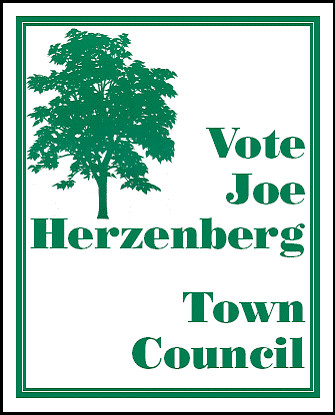
Campaign flyer from Joe’s first Chapel Hill Town Council race, 1979

About Joe

My photo
Chapel Hill, N.C., United States
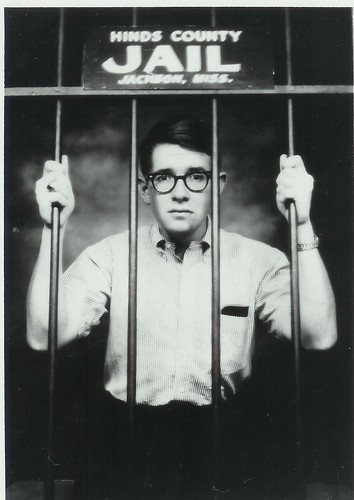
Joe Herzenberg was born June 25, 1941, to Morris & Marjorie Herzenberg. His father owned the town pharmacy in Franklin, N.J., where Joe grew up. After he graduated from Yale University in 1964, Joe went to Mississippi to register voters for Freedom Summer. He joined the faculty of historically black Tougaloo College, where he was appointed chair of the history department. Joe arrived in Chapel Hill in 1969 to enroll as a graduate student in history at the University of North Carolina, and, along with his partner Lightning Brown, soon immersed himself in local, state, and national politics. Although Joe’s first campaign for the Chapel Hill Town Council in 1979 was unsuccessful, he was appointed to the Council to fill a vacant seat and served until 1981. In 1987, he was elected to the Council, becoming the former Confederacy's first openly gay elected official. Joe died surrounded by friends on October 28, 2007. He was 66 years old.

Sunday, July 26, 1992

A Tar Heel town that Dan Quayle would love to hate

A Tar Heel town that Dan Quayle would love to hate: Chapel Hill's dens of radicalism offer haven for the cultural elite

The News & Observer, July 26, 1992

By RUTH SHEEHAN

CHAPEL HILL -- Dan Quayle is making a lot of noise these days about a motley group he calls the cultural elite. He knows they're liberals, mostly Democrats. But so far he has managed to identify only a few by name.

There's Murphy Brown, the unwed TV anchor mom. And Lyndon Johnson, architect of the Great Society and the man responsible for the riots in Los Angeles 19 years after his death.

Quayle might find the hunt for these elusive elitists easier in Chapel Hill, where Birkenstock sandals and "If you want peace, work for justice" bumper stickers are as common as crabgrass. The college town is North Carolina's answer to Berkeley, a California sanctuary for left-wingers, tree-huggers, granola-eaters and social apologists.

...

Chapel Hill is such a bastion of radicalism that Sen. Jesse Helms wanted to put a chain-link fence around it and charge admission.

It seems to meet all the criteria. Consider:

Chapel Hill sells more copies of The New York Times than any other town in the state.

With 137,000 listeners, its home-grown WUNC-FM is the most listened-to public radio station, per capita, in the country.

The university's public television syndicate, now operated out of Research Triangle Park, is the most-watched in the state.

And more people in Chapel Hill subscribe to The New Yorker magazine, per capita, than do people in New York.

Chapel Hill was the first town in North Carolina to pass laws banning discrimination against gays. And it is home to the only openly gay elected official in the state.

...

When the state re-elected Helms to the U.S. Senate, Chapel Hillians voted almost 5-to-1 for his opponent, Harvey Gantt.

And during the Persian Gulf war, Town Council members actually considered making Chapel Hill a safe haven for conscientious objectors.

...

But Mayor Pro Tem Joe Herzenberg, the openly homosexual council member, said the point is moot, anyway.

"I don't think the vice president even knows where we are."

Monday, June 15, 1992

Homosexuals Plan Rally: Leaders Calling for Anti-Bias Laws

The State, Columbia, S.C., June 15, 1992

By ERNEST L. WIGGINS

Scores of gay men and lesbians and their supporters from across South Carolina will rally on the State House Saturday to protest the lack of laws protecting homosexuals from discrimination.

But organizers of the South Carolina Gay and Lesbian Pride March say this weekend will also be a time of celebration. Matt Tischler, executive chairman of the local Gay and Lesbian Pride Movement, said the march "is a chance for gays, lesbians, bisexuals, their friends and supporters to come together."

...

Among the featured speakers at Saturday's rally will be Chapel Hill, N.C. Mayor Pro Tempore Joe Herzenberg, the only openly gay public officeholder in the Carolinas. Herzenberg will talk about the homosexual's role in shaping public policy. "It's important for gay men and lesbians to run and be elected to office," he said.

...

Tuesday, June 2, 1992

Chapel Hill schools seek to protect gays

The News & Observer, June 2, 1992

By RUTH SHEEHAN

CHAPEL HILL -- The Chapel Hill-Carrboro school board sent a message Monday night to vandals who have painted anti-gay slurs on local school buildings in recent weeks:

The school system considers homophobia as bad as racism, sexism and every other kind of prejudice, and will not tolerate it.

Following a series of ugly attacks on a gay teacher at Chapel Hill High School, the board became the first in the state to order a change in its anti-discrimination policies to specifically protect homosexuals.

"I had hoped it wouldn't be necessary to spell out all the different ways we need to be sensitive to other people," said board chairman Mary Bushnell. "But it seems we do."

Over the past three months, the high school has seen his classroom windows broken on numerous occasions and a dead possum thrown onto the floor.

His name, along with anti-gay epithets, has been scrawled in paint on five different buildings and nine school buses. Even his home has been vandalized.

Removing the graffiti cost more than $1,000. But gay-rights advocates say the true cost of the attacks was an increased sense of isolation and fear among homosexual students and staff.

...

Town Council member Joseph Herzenberg, the only openly gay elected official in North Carolina, said both the policy changes and the teacher training are long overdue.

After the attacks on the teacher, Herzenberg wrote a letter to the board at the request of several parents. He said homophobia has been a problem at the high school for almost a decade.

Wednesday, May 6, 1992

This is Chapel Hill, and That's The Law!

RULES MAKE SOME WONDER WHERE EASYGOING TOWN HAS GONE

Charlotte Observer (Associated Press), May 6, 1992

Chapel Hill, the village famous for its open-minded attitude, is cracking down.

Instead of questioning authority, Chapel Hill is imposing it. In the past year, the town council has passed a variety of laws and tightened enforcement of existing ones that restrict smoking, the playing of loud music, gun possession, land use and what children wear when they ride their bikes.

Town leaders say it's all in the name of public interest.

"I believe the primary responsibility of local government in our society is public health and safety," said council member Joseph Herzenberg.

"These legislative efforts with regard to smoking, wearing a helmet, noise and so on are intended to protect the public health and safety. Remember, in your own home, you can smoke yourself to death."

Herzenberg said the council is not made up of a "bunch of irresponsible ninnies" who are out to cramp the town's style. Instead, he said, the council is attempting to balance the protection of personal freedom with the greater needs of the community.

Other folks are less enthusiastic about the town's infringement on what they perceive as personal rights.

"It's sort of like Big Brother," said Dennis Lubahn, a member of the Libertarian Party who lives in Durham and is a professor at UNC-Chapel Hill. "This is kind of the liberal side of Big Brother."

Meanwhile, town leaders downplay Chapel Hill's reputation for breaking new ground in the world of local government.

Council member Joyce Brown noted that other college towns have much stricter limits on noise. Chapel Hill just seems to get more attention, she said.

Tuesday, April 14, 1992

Chapel Hill adopts strict gun ordinance

The News & Observer, April 14, 1992

By RUTH SHEEHAN, Staff writer

CHAPEL HILL -- Joseph A. Herzenberg threatened to use his toy pistol to compel his fellow Town Council members to adopt the state's strictest gun control ordinance Monday night.

But he didn't need it.

With just a few words of praise and no debate, the council unanimously approved an ordinance that prohibits the possession, display and use of firearms on all town-owned property, at street fairs and on public transportation such as buses and taxis.

The ordinance took effect immediately.

Passage of the ordinance -- though unprecedented in the state -- was seen mainly as a symbolic gesture in the normally placid college town.

And although local gun enthusiasts expressed outrage at the effort, calling in the National Rifle Association for advice, not a single resident commented during the council's perfunctory deliberations Monday.

The ordinance is drafted to avoid a direct challenge to the Second Amendment of the U.S. Constitution, which cites the right to bear arms.

And it carefully dodges provisions in the state constitution and state law forbidding municipalities from passing ordinances to govern the purchase, sale or possession of firearms.

The power of municipalities to control the carrying of weapons is more ambiguous, but Town Attorney Ralph D. Karpinos assured council members that the ordinance is well within their purview.

Currently, state law prohibits guns in school yards and on college campuses, and the town of Chapel Hill has an ordinance that makes it illegal to carry a gun in public parks.

Herzenberg -- who has been pressing for the tighter gun controls for almost three years -- said the ordinance would simply set further limits on the places where people can legally carry firearms and other dangerous weapons.

Council member Julie M. Andresen applauded the measure, noting that street fairs and guns are a dangerous mix.

"It makes a lot of sense not to have people carrying firearms around in that situation," she said.

Karpinos said the town's transportation division recently got a call from someone asking whether he could carry a gun on the bus from Chapel Hill to Durham. Until now, Karpinos said, the answer would have been yes.

Friday, March 20, 1992

Chapel Hill official renews bid to limit guns

The News & Observer, March 20, 1992

By RUTH SHEEHAN

CHAPEL HILL -- There have been no reports of gun-wielding lunatics prowling the streets of this quaint university town.

But Town Council member Joseph A. Herzenberg, renewing his call for the toughest gun-control rules in the state, is intent on making Chapel Hill gun-free -- and testing the Second Amendment right to bear arms.

Herzenberg began his campaign for stricter limits two years ago, when he proposed banning or regulating the sale of guns within the town -- moves rejected as violations of state law and the U.S. and North Carolina constitutions.

Now he's taking a more cautious tack, aimed at preventing people from carrying firearms in public places.

"I didn't think we could go as far as I wanted to go," said Herzenberg, who has asked the town attorney to draw up an ordinance restricting guns in Chapel Hill as much as the statutes and constitutions will allow.

If Herzenberg is frustrated, local gun owners and members of the National Rifle Association are outraged. They think the council member has gone too far.

To them, what Herzenberg describes as a "symbolic measure" in the low-crime town of Chapel Hill constitutes a blatant attempt to step on their right to bear arms.

"I am all for the registering of firearms, the waiting period for the purchase of handguns, and I would even support a waiting period for rifles and other firearms," said Mark Fisher, of Chapel Hill, who owns several guns for hunting. "Those things would actually do something, but a law like this on the books would be frivolous.

...

Mark Stone, owner of the Colonial Gun Shop in Hillsborough, one of the largest gun dealers in Orange County, refused to comment on Herzenberg's efforts. Instead, he called the NRA and asked one of their spokesmen to intervene.

Ed Klecka, in the NRA's communications office in Washington, said in turn that he could not discuss Herzenberg's proposal until it is formally presented to the Town Council.

But he did say that while state laws and the state constitution forbid municipalities from passing ordinances to govern the purchase, sale and possession of firearms, the ability of municipalities to control the carrying of firearms is more ambiguous.

"There are real limitations on the statutory authority of towns to regulate guns," said S. Ellis Hankins, executive director of the N.C. League of Municipalities. "A city that is interested in going further may well need some legislation, and that wouldn't be easy."

But citing state law that prohibits guns in school yards and on college campuses, and a town ordinance that makes it illegal to carry a gun in public parks, Herzenberg said he thinks his latest proposal is well within the council's purview.

"I have no illusion that legislation in this area is a cure-all," he said. "However, I know that if you make it against the law to carry a gun in town hall, people may be less likely to carry a gun in town hall."

"This is a good symbolic measure. It can raise the public consciousness about guns, and it can also have some deterrent effect. We like to think of ourselves as a peaceful town, but four people were killed last year, and if we can save one life, we've accomplished a lot."

Thursday, March 12, 1992

Walkers have foothold in Chapel Hill

The News & Observer, March 12, 1992

By SUSAN KAUFFMAN, Staff writer

CHAPEL HILL -- You've seen them -- on Franklin and North Columbia Streets, in Eastowne, on campus or near Broad Street in Carrboro. On foot. In pairs or alone. Dogs in tow. Briskly moving along, or strolling casually.

The walkers of Chapel Hill are restless regulars on the sidewalks and pathways.

...

They like the fresh air, the chance to commune with nature, or to brush the cobwebs from their minds. Some, such as Town Council member Joseph A. Herzenberg, refuse to own cars and walking is their form of transportation.

"It's a statement of sort," Herzenberg said. "I think too much of our life and world is dominated by private automobiles. Some people couldn't live without them."

Herzenberg, who saunters downtown, views exercise as a byproduct of walking. More importantly, it's a great way to socialize and keep abreast of the latest news.

"I never quite learned to leave home early enough to get someplace on time," Herzenberg said. "I'm frequently interrupted, but that's OK."

Saturday, January 11, 1992

AIDS support group hopes second try to buy house succeeds

The News & Observer, Jan. 11, 1992

CHAPEL HILL -- Two years after failing to buy a house for homeless AIDS patients, an Orange County group is preparing to try again.

The Orange County AIDS Task Force gave up efforts to buy a house on Taylor Street in 1989, soon after being barraged by complaints from neighbors. But this time, members of the group are determined to succeed. Part of what's fueling their confidence is nearly $100,000 the group recently received in private grant money.

Still, Jean Bolduc, president of the group, now called the AIDS Service Agency of Orange County, is bracing for an onslaught of criticism from people who don't like the idea of AIDS patients living in their community.

"You think Chapel Hill is such a liberal place," she said. "But it really isn't."

Within six months, Bolduc hopes to raise the rest of the $275,000 that's needed to secure a house and convert it to a six-bed home for patients. Agency officials plan to choose a site by next year.

She hopes to avoid controversy this time by keeping the community involved in the project.

"People oppose things when they sneak up on them," she said, blaming the earlier reaction on ignorance about AIDS, "which is not unique to Orange County."

The effort is important to Chapel Hill because about 750 AIDS patients from across the state regularly travel to UNC Hospitals for treatment.

Some stay in homeless shelters or check into the hospital for lack of a better place.

Many AIDS patients can't afford a place to live, said Mary Hoover, a UNC Hospitals social worker.

"It's a fairly common scenario," she said. "When AIDS patients become too sick to work, many go on government disability and can no longer afford a home."

Although four Chapel Hill families house AIDS patients for short stints, a more permanent solution is needed, said Dr. Peter Millard, vice president of the AIDS Service Agency.

"Homelessness is a tremendous problem for those infected with HIV," he said. "People end up staying in the homeless shelter, and that's a great danger for them."

Joe Herzenberg, a Chapel Hill Town Council member who is also involved in the AIDS project, said neighborhood opposition shouldn't hamper plans this time.

"I'm sure there are people who would prefer not to have people with AIDS living next door," he said. "My attitude is, 'So what?' It's against the law to discriminate."

And Herzenberg also hopes people have learned more about AIDS in the past two years. "There was a hysterical quality about some people," he said. "It seems to me that people seem better educated now. This is Chapel Hill, a highly educated community where there is a very large medical presence."

Friday, December 6, 1991

Towns may call on UNC to poll public

The News & Observer, Dec. 6, 1991

By RUTH SHEEHAN, Staff writer

CHAPEL HILL -- Your local government may be calling you this spring. But it won't be about taxes.

Chapel Hill and Carrboro officials are expected next month to approve an agreement with the University of North Carolina School of Journalism and the Institute of Social Science Research to conduct a poll of voters. Questions will cover such local issues as bicycle helmets, land use, schools, taxes and more.

The poll, tentatively dubbed "Public Pulse," is indicative of a growing trend in local government.

...

But if a majority of local leaders are enthusiastic about the prospect of the surveys, Chapel Hill town councilman Joseph Herzenberg has some doubts.

Calling the polls "government by electronic plebiscite," Herzenberg said officeholders are elected to make decisions, not react to public opinion.

He pointed out that people often do not respond in real life the way they answer questionnaires.

"Who's going to say they want higher taxes?" Herzenberg asked.

Tuesday, December 3, 1991

New path forecast for board: Personnel changes alter Town Council

The News & Observer, Dec. 3, 1991

CHAPEL HILL -- In a bittersweet ceremony Monday night, the Town Council mourned the recent death of board member and former Mayor James C. Wallace and swore in its newly elected officials.

...

The town's three most senior elected officials were replaced by political newcomers.

Kenneth S. Broun, a University of North Carolina at Chapel Hill law professor, was sworn in as mayor. He was joined by Joseph J. Capowski, a neighborhood activist, and Mark H. Chilton, 21, a UNC-CH undergraduate and the youngest elected official in the state.

Incumbents Joseph A. Herzenberg and the Rev. Roosevelt Wilkerson Jr. were sworn in for second terms on the council and Herzenberg was elected mayor pro tem.

With the swearing in of new members, current council members predicted a change in the style and direction of the board.

Among the issues facing the group are a call for a reduced tax rate, a greater demand for town services, the growth of the University of North Carolina, the search for a new landfill and increased crime and traffic.

"A week ago, I was about to pull into what I thought was a vacant parking place at town hall and I found a bicycle there," said council member Wilkerson, refering to Chilton's usual form of transportation.

"And I thought to myself, 'Boy, are things changing.'"

Monday, December 2, 1991

The season for giving thanks

MINUTES OF THE ORGANIZATIONAL MEETING OF THE MAYOR AND COUNCIL OF THE TOWN OF CHAPEL HILL, NORTH CAROLINA, MONDAY, DECEMBER 2, 1991

Mayor Howes called the organizational meeting to order.

Council Members in attendance were Julie Andresen, Joyce Brown, Joe Herzenberg, Nancy Preston, Alan Rimer, Arthur Werner and Roosevelt Wilkerson, Jr. Also in attendance were Chief Justice of the Supreme Court of North Carolina James G. Exum, Mayor-Elect Kenneth Broun, Council Member-Elect Joe Capowski, Council Member-Elect Mark Chilton, Assistant to the Mayor Lisa Price, Town Manager Cal Horton, Assistant Town Managers Sonna Loewenthal and Florentine Miller and Town Attorney Ralph Karpinos.

...

Council Member Preston said she envied the next recipient of cryptic notes from Council Member Herzenberg.

...

Item 8 Organizational Business

COUNCIL MEMBER WERNER MOVED, SECONDED BY COUNCIL MEMBER BROWN, FOR COUNCIL MEMBER HERZENBERG TO BE APPOINTED AS MAYOR PRO TEM. THE MOTION WAS ADOPTED UNANIMOUSLY (9-0).

...

Mayor pro tem Herzenberg said it was the season for giving thanks. He thanked all those attending this evening's organizational meeting. Mayor pro tem Herzenberg also thanked all those who had been instrumental in his re-election to the Council. He said that voters deserved the gratitude of all for achieving the highest voter turnout ever for a local election. Mayor pro tem Herzenberg said this was a good sign for the health of democracy in the Town. He noted that residents of public housing neighborhoods and University students had voted in record numbers. Mayor pro tem Herzenberg said he hoped could live up to the standards of those he represented.

Thursday, November 7, 1991

Student, 21, is likely youngest state winner

The News & Observer, Page B1, Nov. 7, 1991

By RACHEL BUCHANAN, Staff writer

CHAPEL HILL -- If Mark Chilton had been born two months later, his political savvy would be for naught.

Mr. Chilton, the surprise winner of one of four open seats in Tuesday's Chapel Hill Town Council election, barely made the legal age limit to enter the race. He turned 21 five weeks before election day.

That makes him the youngest elected official in town history. Although the state Board of Elections does not keep statistics on the ages of elected officials, he is probably the youngest candidate ever elected in the state.

And, more significantly for local politics, he is the first undergraduate at the University of North Carolina to be elected to a four-year term on the council.

Gerry Cohen won a seat on the town council in 1973 while he was a graduate student at UNC-CH. But Mr. Chilton is a senior, 21 credits short of graduation. And he was successful against eight opponents, including longtime town business owners, experienced politicians and dedicated community activists.

"Why did he win?" asked council member Arthur S. Werner, who was not up for re-election Tuesday. "He beat the other candidates. He came across as a very nice young fellow who was not a single-issue candidate."

Despite Mr. Chilton's age and student status, his election was no fluke. He began organizing a detailed campaign to win in January -- months before many of his opponents even considered bids.

"This morning I heard two businessmen talking about Mark," said Joseph A. Herzenberg, a town council member who won re-election Wednesday.

"One of them said, 'How did Mark fool so many people into voting for him?' And the other answered, 'Well, he fooled me by coming up to me and asking me for my vote.'"

Mr. Chilton looks younger than his age. His red paisley tie hangs conspicuously on a rumpled white oxford shirt. Blond-haired and round-faced, he could be mistaken for a freshman.

"Obviously that was the face he presented to the voters," said departing Mayor Jonathan B. Howes, a government professor at UNC-CH who has taught Mr. Chilton.

"Maybe that was something voters took comfort in. If they wanted to elect a student, he really looked like a student."

Mr. Chilton was born in Seattle and has lived in St. Louis, Raleigh and Warrenton, Va. He attended Episcopal High School, a boarding school in Alexandria, Va., and now lives off-campus in the Northside neighborhood. His parents, Scott and Mary Dell Chilton, live in Raleigh, which Mr. Chilton describes as "mass suburban sprawl."

The elder Chilton, a botany professor at N.C. State University, was surprised by his son's decision to run for office.

"We're very proud of him," Dr. Chilton said. "He's come a long way.

"As a child he had problems with disorganization. He'd do his homework and then forget to take it to school. I can remember one day I went to pick him up from school and he was a block away looking in the sewer. He said he thought he had dropped his homework in there."

An idealistic, environmental activist, the council member-elect became politically active during his sophomore year after a trip to Costa Rica with the Student Environmental Action Coalition.

"It made me realize that it's not that there aren't enough resources for everyone to get by in the world," Mr. Chilton said. "It's that they aren't fairly distributed."

He said he won the town council race because he surprised voters with his knowledge of the issues, especially his well-researched stand on transportation and solid-waste issues. And he credits his friends with hard work.

The 20 student members of the Mark Chilton For Council staff used homemade tactics to create a successful political machine.

They tacked up homemade poster-board and paint signs all over town, placed balloons around campus on election day and organized dorm captains to remind student voters to head to the polls.

But the campaign wasn't without its sophisticated elements. Mr. Chilton's staff contacted every registered voter on campus, conducted precinct analyses of voters to determine likely areas of support across town, and solicited the endorsement of the NAACP, the Orange County Greens, the Sierra Club and local newspapers.

The result was a heavy student turnout and an interesting election night for the town's political observers.

But when asked if the race will encourage him to seek a life in politics, Mr. Chilton leaned back and sighed.

"Gosh," he said. "I hope not."
Wednesday, November 6, 1991

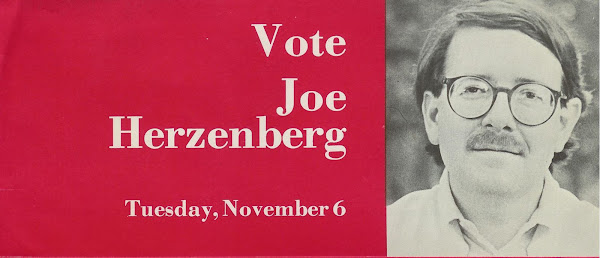
Joe re-elected as top vote-getter in Town Council race

Town elects undergrad to council: UNC-CH's Chilton makes history; law professor wins mayoral race

The News & Observer, Nov. 6, 1991, Page A1

CHAPEL HILL -- Chapel Hill voters bolstered their historical ties to the University of North Carolina on Tuesday, electing a law professor as mayor and an undergraduate geography major to a seat on the town council.

In unofficial returns, Kenneth S. Broun, former dean of the UNC-CH School of Law, swept 50 percent of the vote in the three-candidate race for the town's top elected office. And Mark H. Chilton, 21, a UNC-CH senior, took 3,012 votes in the council race. That was enough to defeat eight other candidates and
squeeze into the fourth and final available seat on the board.

The victory surprised the town's political observers: Chapel Hill has never before elected an undergraduate to the board. "I think this race challenged a lot of people's ideas," Mr. Chilton said. "I think some people thought a student couldn't make a serious run and that a student couldn't be qualified."

Mr. Chilton, whose parents live in Raleigh, credited his victory to strong student turnout and his endorsements from the Sierra Club, the NAACP, the Orange County Greens and local newspapers, including The Daily Tar Heel.

The council race drew an unusually large field - 12 candidates. And with the two incumbents emerging as early favorites, the remaining 10 candidates were left to compete for the two last spots.

Incumbents Joseph A. Herzenberg and the Rev. Roosevelt Wilkerson Jr. won easily, with Mr. Herzenberg drawing the most votes at 4,803 and Mr. Wilkerson coming in second with 4,476.

(Editor's note: In addition to running his own race for re-election, Joe was an enthusiastic supporter of Mark Chilton's candidacy for Chapel Hill Town Council in 1991. He was a mentor and adviser to Mark, providing Chilton's campaign with logistical and organizational help, access to donors, and introductions to key contacts on the local political scene. Chilton's victory made him the first undergraduate elected to public office in North Carolina.)

Monday, November 4, 1991

Full races to spur Chapel Hill changes

The News & Observer, Nov. 4, 1991

CHAPEL HILL -- One thing is sure in Chapel Hill's crowded Town Council and mayoral races: Tuesday will bring a change in the town's political leadership.

Four council seats will be filled in Tuesday's election, sparking a close race between 12 candidates -- many of them political newcomers. The mayoral race between three candidates is equally tight.

...

In Chapel Hill, the crowded race is likely to sweep some new political perspectives into town government, especially since the town's three most senior elected officials are not seeking re-election.

"It is very important, when running a government, to know what happened the day before yesterday or the year before last," said Joseph A. Herzenberg, a Town Council member seeking re-election. "There are not a lot of people around here who have much of a collective memory of municipal government."

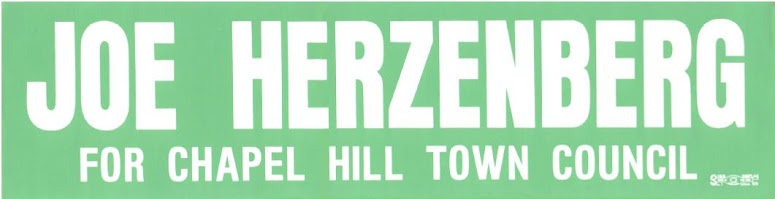
Vote Joe Herzenberg yard sign, 1991. Thanks to Mark Donahue and his talented co-workers at Replacements, Ltd. for restoring this yard sign to its original glory!

Tuesday, October 1, 1991

Who votes affects public policy

The News & Observer, Oct. 1, 1991

High voter turnout areas tend to be settled neighborhoods with plenty of homeowners and families, with middle to upper incomes and home values, with higher education levels and with most adults 30 or older.

Such differences in the profile of voters have implications for public policy. Those who vote set the agenda -- and those who don't are left out.

"It would appear there's a consistent bias in terms of who does vote and whose interests are represented," said Thad Beyle, a political science professor at UNC-Chapel Hill. "The same bias occurs in terms of who runs for office and who wins."

In any election, a good portion of the people who could vote don't vote. In November, despite the closely watched U.S. Senate race between Republican incumbent Jesse A. Helms and Democratic challenger Harvey B. Gantt, less than half of the Triangle's 18-and-older population cast ballots.

In local elections, without the lure of highly publicized national and state contests, even fewer people go to the polls.

...

The needs of poor neighborhoods can be slighted when few votes come from them, said Joseph Herzenberg, a member of the Chapel Hill Town Council. Sometimes such neighborhoods find themselves host to unpopular projects, such as halfway houses for troubled teens or for the mentally ill, because middle-class activists know how to use their pull to block the projects from their own communities.

"Despite a commitment to fairness and the notion of the full participation of the entire population in the political process, it does in fact skew it toward middle and upper-middle class homeowners," he said.

...

However, a high turnout is not always in a politician's best interest.

Mr. Herzenberg said that some years ago, liberal candidates in Carrboro were able to assure electoral success by supporting public transportation. Students, who depended on the buses to get to classes, got out and voted for liberals to make sure the bus system would survive.

Conservatives, who had opposed public spending on the bus system, eventually figured out the liberal strategy and switched their position, he said. Lacking an issue to draw them to the polls, students stopped voting -- and conservatives started winning elections.

Thursday, September 19, 1991

Trees mistakenly cut near bypass

The News & Observer, Sept. 19, 1991

By SUSAN KAUFFMAN, Staff writer

CHAPEL HILL -- A state slip of the ax has caused some town residents to criticize the state Department of Transportation for cutting more trees than they say were necessary as it widens the bypass around town.

Two weeks ago contractors for the transportation department began clearing wide swaths of trees and foliage to expand the intersection of South Columbia Street and N.C. 54 -- another stage in the bypass widening project.

In the process, a state highway subcontractor mistakenly cleared a patch of hardwood trees and brush on private property in the Westwood neighborhood, which borders N.C. 54 to the north.

As a result some people are angry about the clearing in general that stretches west on N.C. 54 as well as the encroachment onto private property.

"It was quite a slaughter of trees, not just for the property owners immediately affected, but for drivers on Fordham Boulevard. It's an absolute disaster," council member Joseph A. Herzenberg said.

...

Riding herd on the state is what another Westwood resident asked the Chapel Hill Town Council to do last week. Brent Lambert, backed by a group of neighbors, informed council members that he had prevented more damage from occurring on the property of his neighbor, Sydenham B. "Syd" Alexander.

"I hope the council takes this example and acts upon it to prevent it happening in the future," Mr. Lambert said.

...

Council members said they shared Mr. Lambert's concern.

"The tree protection task force worked for well over a year on the ordinance and all the time, the bad guys we had in mind were private developers, utility companies or maybe a crazed anti-tree citizen," Mr. Herzenberg said. "We never seriously considered a government agency would indulge in massacring trees."

Saturday, September 14, 1991

Group to seek gay candidates - Fund-raiser, meeting set

The News & Observer, Sept. 14, 1991

By MARLA COHEN, Staff writer

DURHAM -- A new organization wants to bring more candidates for public office out of the closet and into the state political arena.

The North Carolina Lesbian and Gay Political Action Agenda is gearing for its organizational meeting and fund-raiser on Sept. 21. One goal is to encourage openly gay and lesbian candidates to run for local and statewide public offices.

"We already know there are lesbians and gays in the General Assembly," director Mandy Carter said. "We want more to run, but we also want those who are already there to feel like it's not political suicide to be out."

...

One way the group hopes to achieve its goal is by putting money behind its endorsements. And development of a political action committee could go a long way toward that end, Ms. Carter said.

Although forming too late to tackle the 1991 elections, Ms. Carter and another organizer, Michael R. Nelson, have roughly sketched plans for the next five years.

...

After the 1990 Senate race in which Republican Sen. Jesse A. Helms defeated Democrat challenger Harvey B. Gantt, gay and lesbian organizers realized a need for an ongoing political organization to promote their interests. During that heated race, N.C. Senate Vote '90 was formed.

Senate Vote '90 sought to defeat Mr. Helms by conducting a campaign against him independent of Mr. Gantt's efforts. The group raised about $275,000 in its efforts, said Ms. Carter, who was the organization's only paid staffer.

Mr. Nelson, who ran as an openly gay candidate for the Carrboro Board of Aldermen in 1989, said it would be premature to discuss specific goals of any political action committee that develops from these efforts. But generally, the group would aid gay and lesbian campaigns as well as those of heterosexual candidates that are supportive of gay issues.

Nationwide there are 56 openly gay and lesbian elected officials. Including political appointees, there are more than 1,000 out-of-the-closet officials, according to figures from the Human Rights Campaign Fund, a Washington-based political committee concerned about gay and lesbian issues.

But North Carolina's only openly gay office holder is Chapel Hill Town Council member Joseph A. Herzenberg.

And while political action committees have come under fire as a way for private interests to fill campaign coffers, organizers say they are part of the system.

"I have some reservations about them myself," said Mr. Herzenberg, who said he would not use any funds from this or any other political action committee in his re-election campaign. "But they are part of the political landscape, and an effective way of citizens getting their will across to elected officials."

Tuesday, August 20, 1991

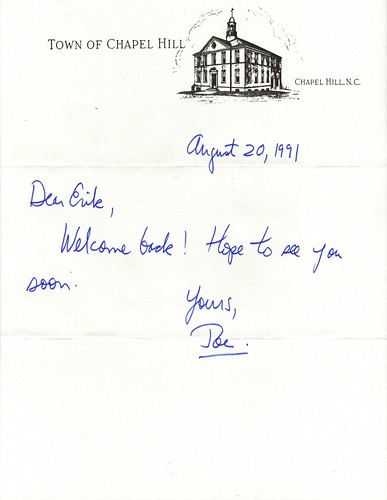
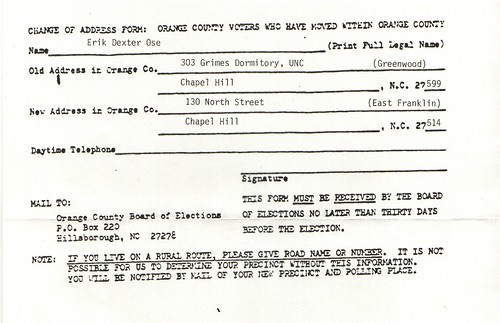
Note from Joe - Welcome back (and welcome to East Franklin precinct)


When I moved off campus into the Pink House on North Street in the summer of '91, just around the corner from Cobb Terrace, I became Joe's neighbor and a new resident of East Franklin precinct.


Joe served as precinct chair of East Franklin for 35 years, from 1972 until his death. Always excited to have another Democrat on the rolls, he took the liberty of filling out a change-of-address form to welcome me aboard.

Every year on Election Day, rain or shine, you could count on seeing Joe outside the East Franklin polling place at the Lutheran Church on East Rosemary Street. Standing just outside the line beyond which no campaigning was allowed, Joe would greet and talk with the voters who showed up, nearly all of whom knew him. It goes without saying that if anyone needed advice about which candidates were especially good that year, Joe was more than happy to help out.


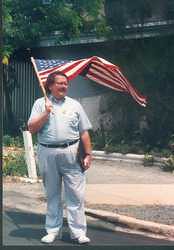
Joe on North Street in Chapel Hill, 1991

Friday, June 28, 1991

One act of violence using a gun is too many

Guns, shootings increase on Chapel Hill streets

The News & Observer, June 28, 1991

CHAPEL HILL -- Guns are appearing more frequently in Chapel Hill, and gun-related crime is skyrocketing, police say.

"We've been concerned about it all along but when the public hears about it they raise an eyebrow," Capt. Ralph V. Pendergraph said. "It's sort of a national trend." Police point to recent shootings in the downtown area and to an increase in fatal shootings during the past two years. They also say the number
armed robberies has risen sharply in Chapel Hill and Carrboro in the last year.

...

Early last year, the escalation in violence prompted Town Council member Joseph A. Herzenberg to call for a restriction on gun sales. But a report issued by town Attorney Ralph D. Karpinos concluded the town did not have the authority to pass such an ordinance.

Mr. Herzenberg said Thursday he would like to see the issue of gun control rekindled in light of the recent incidents.

"Every time there's an act of violence involving a gun I think of it," he said. "One act of violence using a gun is too many. Frankly, I don't think it's an issue Chapel Hill is divided on."

He said it was important to do what is necessary to preserve downtown Chapel Hill as a safe place.

"There's no doubt in my mind that Chapel Hill is the only town in North Carolina that has a Main Street as dynamic as we do," he said. "We really have a jewel and we need to polish it."

Wednesday, June 5, 1991

Mayor's race apt to be crowded

The News & Observer, June 5, 1991

By RACHEL BUCHANAN, Staff writer

CHAPEL HILL -- The decision by Mayor Jonathan B. Howes not to seek re-election has opened political floodgates in Chapel Hill, creating speculation and encouraging a pack of would-be candidates.

Traditionally, campaign posters don't start popping up on Chapel Hill lawns until the leaves change color. But Mr. Howes' announcement last month has prompted an early opening in the political season.

...

Two board members likely to consider a bid for the job are Nancy Preston, mayor pro-tem, and Joseph A. Herzenberg, the only openly gay elected official in the state. Ms. Preston was unavailable for comment. Mr. Herzenberg said he had not decided whether to run.

"I've had discussions with my campaign-planning staff and we haven't made any decision yet," he said. "We may not announce it to the world before September. Long campaigns are a bad idea."